

A Guide to Glasses for Driving at Night
If you've ever felt that white-knuckle tension gripping the steering wheel after dark, you're not alone. The best glasses for night driving are usually a simple, effective combination: a clear lens paired with a high-quality anti-reflective (AR) coating. This setup tackles the biggest nighttime driving complaint—glare—without tinting your vision and making it even harder to see.
An AR coating is designed to cut down on the reflections bouncing off your lenses from oncoming headlights and streetlights. This allows more of the "good" light to pass through, giving you a sharper, clearer picture of the road ahead.
Why Driving After Dark Is So Challenging
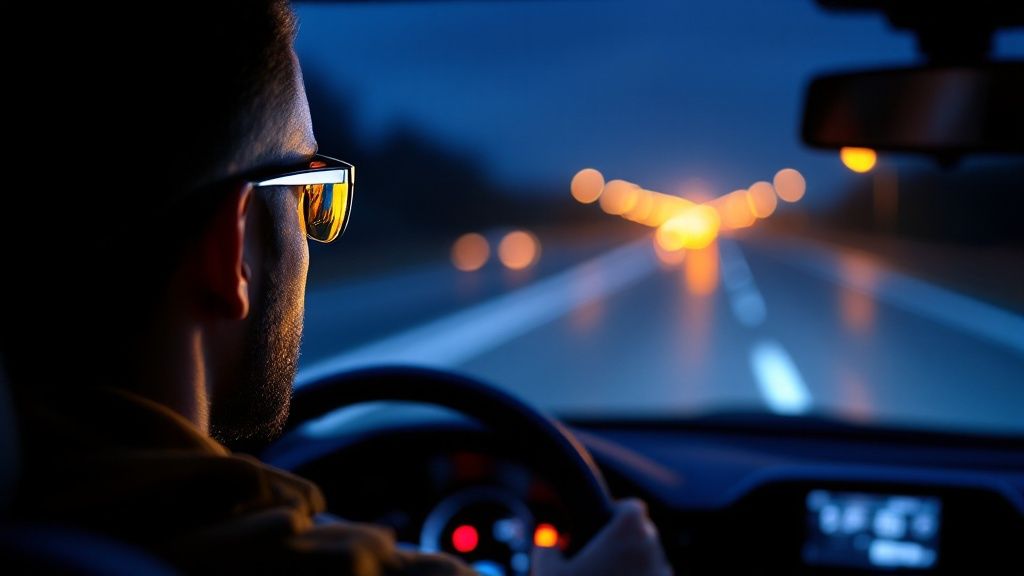
Driving when the sun goes down flips a switch on our vision. It’s a completely different ballgame. Our eyes simply aren't built for peak performance in low light, which makes it much tougher to judge distances, see things in our periphery, and react quickly to a deer or a pothole.
This is made worse by the very things meant to help us see: artificial lights. The piercing glare from modern LED headlights can feel like a camera flash, momentarily blinding you. Streetlights create distracting halos and starbursts that dance across your windshield. All of this visual noise forces your eyes to work overtime, leading to strain and a serious dent in your driving confidence.
Common Problems and Eyewear Solutions
To fight back against these challenges, many drivers turn to specialized eyewear. But "night driving glasses" isn't just one type of product. It's a broad category of lens technologies all aimed at making you more comfortable and your vision clearer. The basic idea is to filter out the harsh, distracting light while letting in all the useful light you need to see clearly.
Here’s a quick breakdown of how the right glasses can help with the most common frustrations of night driving.
Night Driving Challenges and Eyewear Solutions
| Common Night Driving Problem | How Specialized Glasses Help |
|---|---|
| Blinding glare from headlights | Anti-reflective coatings drastically reduce reflections, sharpening your view. |
| Halos or "starbursts" around lights | High-quality lens materials can minimize how light scatters, making light sources crisper. |
| Difficulty seeing road signs | By reducing glare, the contrast between signs and their background is naturally improved. |
| General eye strain and fatigue | Filtering harsh light reduces the constant squinting and effort your eyes have to make, increasing comfort. |
Specialized eyewear essentially cleans up the chaotic visual information, allowing your brain to focus on what matters most.
The Growing Need for Better Night Vision
It’s no surprise that the market for this kind of eyewear is growing. With more cars on the road and advancements in bright headlight technology, the need for a solution is real. In fact, some analysts project the night driving glasses market will hit $2.5 billion by 2025.
This trend is fueled by a few things: an aging population experiencing natural changes in their night vision, more people driving after dark, and better lens technologies becoming available.
Good eyewear acts as a filter, not a miracle cure. It helps manage the light that enters your eyes, reducing the "visual noise" from glare and reflections so you can focus on the road ahead.
Of course, glasses are only one part of the equation. Pairing them with safe driving habits is the key to truly taking control of your nighttime drives. To round out your strategy, exploring these essential night driving tips can make a huge difference. By combining the right gear with smart practices, you can make driving after dark a much safer and less stressful experience.
How Anti-Glare Technology Clears Your View
So, how do the best glasses for night driving work their magic? It really boils down to two key pieces of lens technology. These features are specifically designed to manage light before it ever reaches your eyes, cutting down the visual chaos you experience on a dark road.
Let's demystify the science that makes a clearer, more comfortable nighttime drive possible.
The single most important innovation here is the anti-reflective (AR) coating. The easiest way to think about it is like the special coating on a high-quality camera lens. Without that coating, the camera would pick up all sorts of distracting reflections and lens flare, leaving you with a washed-out, fuzzy photo.
An AR coating on your glasses does the exact same job for your eyes. It’s an incredibly thin, transparent layer that dramatically cuts down the reflections bouncing off both the front and back of your lenses. This lets more light pass straight through, which translates to less glare from oncoming headlights and a much crisper view of the road ahead.
The Power of Anti-Reflective Coatings
When you wear standard, uncoated lenses, a small but significant percentage of light reflects off the surface instead of passing through. During the day, you might not notice it. But at night, when your surroundings are dark and light sources are intensely bright, those reflections explode into blinding starbursts and halos.
An AR coating can allow up to 99.5% of available light to pass through the lens to your eye. This is a game-changer for maximizing visual clarity and minimizing the dangerous glare that makes night driving so stressful.
By virtually eliminating these reflections, an AR coating sharpens your vision and reduces the eye strain that comes from constantly squinting against bright lights. It's no wonder this single feature is the most recommended solution by eye care professionals for improving nighttime visibility.
If you want to dive deeper into how these coatings work, our detailed guide on night anti-glare glasses offers a closer look at the technology.
Understanding Polarization
The second technology you'll often hear about is polarization. While AR coatings deal with reflections on your lenses, polarized lenses are designed to tackle glare coming from the world around you.
The classic analogy is a venetian blind turned on its side. That’s a perfect picture of how polarization works. The lens contains a vertical filter that only allows vertical light waves to get through. The most intense, blinding glare—like the kind reflecting off a wet road or the hood of another car—is almost always horizontal.
Polarized lenses block this horizontal light, essentially "closing the blinds" on the worst types of glare. This makes them incredibly effective for daytime driving, particularly in bright sun or wet conditions. For night driving, however, their use is a bit more debated. Because they block some light, they can sometimes reduce overall visibility or interfere with the digital screens in your car.
For most drivers, a top-notch AR coating remains the undisputed priority for a safer trip after dark.
The Truth About Yellow-Tinted Lenses
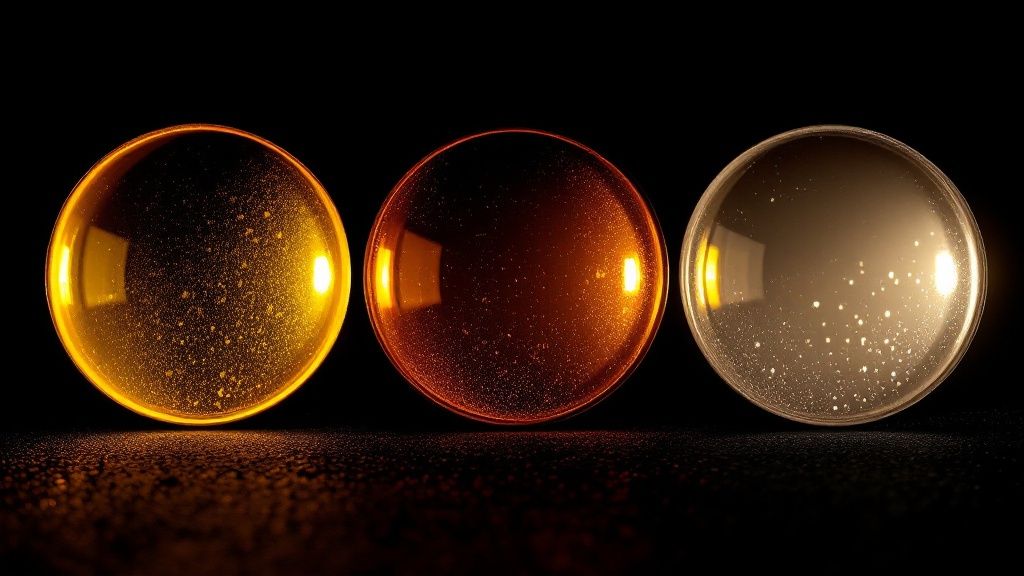
When you start looking for night driving glasses, yellow-tinted lenses are everywhere. They're the most common—and most debated—option on the market. You've probably seen the ads promising "HD vision," claiming they make everything sharper and clearer after dark.
The logic behind them is pretty simple. The yellow tint filters out a chunk of the blue light spectrum. This can give you the sensation of higher contrast, which is why some people swear by them for daytime driving in foggy or overcast weather. It's a powerful feeling, and it's a huge selling point.
But here’s the catch, and it’s a big one. The very act of filtering light means that less total light reaches your eyes. When you're driving in the dark and visibility is already low, cutting down the amount of light you have to work with can be a serious step in the wrong direction.
The Science Versus The Sensation
It’s easy to believe that because yellow lenses make things feel brighter and crisper, they must be helping you see better. But the scientific evidence and the advice from nearly every eye care professional out there tell a very different story for nighttime use.
At night, your eyes need every last bit of light they can get to see clearly. Any tint, yellow included, is essentially a filter. It darkens your overall view, which can hurt your ability to spot a pedestrian, a cyclist, or a pothole on a poorly lit road.
So while they might take the edge off some of the glare from bright blue-heavy LED headlights, they do it by sacrificing overall visibility. That's a dangerous trade-off when your reaction time is all that matters.
When Might They Be Useful?
Does this mean yellow lenses are completely useless? Not at all. They just have a very specific job, and true nighttime driving isn't it. Their knack for boosting contrast can be a real asset in low-light conditions—just not no-light conditions.
- Foggy or Hazy Mornings: The yellow tint is great at cutting through that diffused, scattered light you get in fog, helping objects look more defined.
- Overcast Days: On those gray, flat-light days, they can add some much-needed contrast. This is why skiers and cyclists often favor them.
- Twilight or Dusk: In that transitional period as the sun is going down, they can help sharpen your view before it gets truly dark.
In these specific situations, yellow lenses can genuinely help. But as soon as the sun is completely gone and you're relying on streetlights and headlights, their value plummets.
For actual night driving, eye care experts are nearly unanimous: clear lenses with a high-quality anti-reflective (AR) coating are the safer, more effective choice. They tackle glare without dimming your view of the road ahead.
How to Choose the Right Night Driving Glasses
Picking out the right glasses for night driving isn't as simple as grabbing the first pair you see. To get the best results, you really need to think about a few key things that all work together to give you a clearer, less stressful view of the road after dark. Considering the lens material, how the frames fit, and whether you need a prescription will make all the difference.
First up is the lens material. I almost always recommend polycarbonate for any kind of driving glasses. It's incredibly tough and impact-resistant, which is a huge safety plus, and it's super lightweight. You'll barely notice you have them on, even on longer trips.
Next, let's talk about frame fit. A good frame does more than just hold the lenses. It needs to be comfortable—no pinching or slipping—and, crucially, give you a wide, unobstructed field of view. Any frame that blocks your peripheral vision is a non-starter; you need your sightlines completely open to stay safe.
Prescription vs. Non-Prescription Options
One of the first decisions you'll make is whether you need prescription lenses. If you already wear glasses to correct your vision, you have a couple of really convenient options. Many drivers go for a dedicated pair of prescription night driving glasses that have a top-notch anti-reflective (AR) coating.
Another great solution is using fit-over or clip-on styles. These are designed to go right over your existing prescription glasses. It's an easy and often more budget-friendly way to get the benefits of specialized lenses without springing for a whole new pair of specs. If you want to dive deeper, our guide on how to improve night driving vision has a ton of extra details.
Comparing Different Lens Technologies
With all the different lens types out there, it can feel a little overwhelming trying to figure out which one is actually going to help with night driving. There's a reason the market for these glasses is growing so fast—people are finally realizing how much of a difference the right tech can make for safety. In fact, the global market for night vision driving glasses is on track to hit around $432 million by 2025. This growth is all about better lens technology and more drivers looking for real solutions to nighttime glare.
So, how do you sort through the options? Let's break down the most common lens technologies to make it a bit easier.
Feature Comparison of Night Driving Lens Types
To simplify your choice, this table compares the heavy hitters in the night driving lens world. Each has its place, but one is a clear winner for nighttime use.
| Lens Type | Primary Benefit | Potential Drawback | Best For |
|---|---|---|---|
| Clear with AR Coating | Maximizes light transmission while cutting glare from headlights and streetlights. | Does not enhance contrast in the same way tinted lenses do. | Virtually all night driving situations; the safest and most recommended option. |
| Polarized Lenses | Excellent at blocking intense, horizontal glare from reflective surfaces like wet roads. | Can reduce overall light and may interfere with LCD/LED dashboard screens. | Daytime driving in bright sun or rainy conditions; less ideal for night. |
| Yellow Tinted Lenses | Creates a sensation of higher contrast, which can be useful in some conditions. | Reduces the total amount of light reaching the eye, potentially impairing vision at night. | Foggy or overcast daytime conditions; generally not recommended for true night driving. |
As you can see, clear lenses with a quality AR coating are really the gold standard. They let the maximum amount of light through to your eyes while selectively cutting down on the distracting glare that makes night driving so tricky.
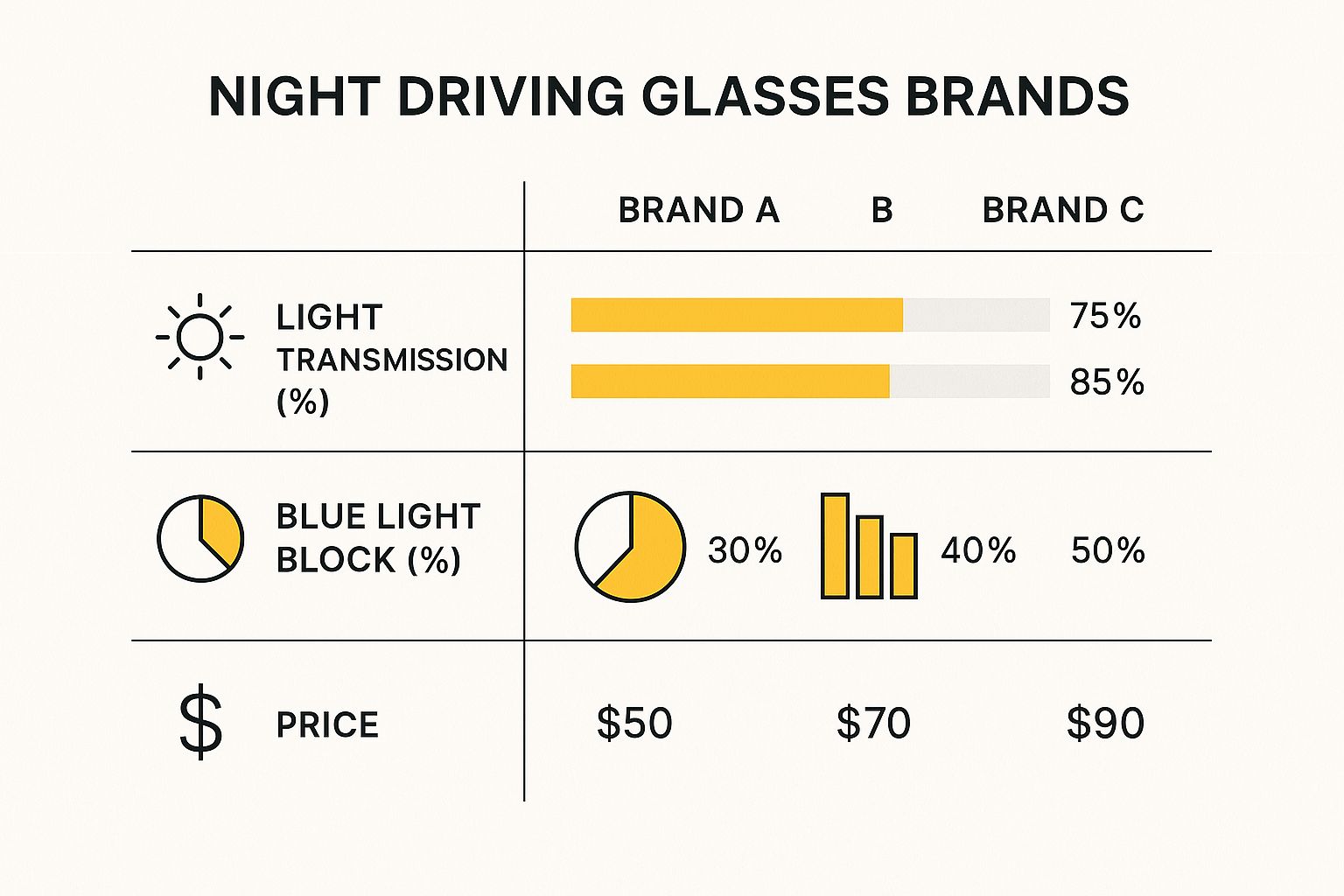
This image highlights a key point: high light transmission is absolutely essential for seeing clearly at night. While other factors like price matter, your first priority should always be letting in as much light as possible. Making an informed choice here is about more than just comfort—it’s about boosting your confidence and safety every time you get behind the wheel after sundown.
Reducing Eye Strain from Modern Headlights
If you think modern headlights seem incredibly bright, you’re not imagining it. The reason is a shift toward high-intensity discharge (HID) and LED technology, which pumps out a powerful, blue-heavy light. While fantastic for the driver behind them, this light can be a nightmare of discomfort and fatigue for everyone else on the road.
This high-energy visible (HEV) blue light scatters much more easily than other colors, creating that sharp, almost painful glare. When your eyes are constantly hit with this intense light, they have to work overtime just to focus. On a long drive, this can easily lead to serious eye strain, headaches, and that feeling of being completely overwhelmed by the lights around you.
The Role of Blue Light Filtering
This is where the right kind of lens technology can make a world of difference. An anti-reflective coating is your first line of defense against general glare, but lenses that specifically filter blue light are the key to tackling the harshness of modern headlights and even the glow from your car's dashboard.
By filtering out the most aggressive wavelengths of blue light, these glasses essentially turn down the visual "static" of nighttime driving. The result? A far more comfortable and relaxed visual experience, letting your eyes stay focused on the road without all the extra effort. Cutting down on that strain is a huge deal for staying alert on long or late-night trips.
A Modern Solution for Modern Headlights
Plenty of yellow-tinted glasses on the market claim to filter blue light, but they often achieve this by dramatically distorting color—not exactly what you want when you need to see the road accurately. The smarter approach is to find lenses engineered for both clarity and targeted filtering.
For this exact problem, PROSPEK glasses are an excellent solution. Their lenses are designed to filter the most disruptive part of the blue light spectrum without that heavy, distracting yellow tint.
This intelligent filtering gives you the best of both worlds: you get the eye strain relief from harsh artificial light while still seeing colors much more naturally. It's a balanced approach that makes them great for both night driving and your daily screen time.
Because they aren't heavily tinted, PROSPEK glasses can cut the harshness of LED headlights without dimming the overall light you need to see safely.
Of course, while glasses help, don't forget the basics. A crucial part of reducing glare for everyone is proper vehicle lighting maintenance. When your own headlights are aimed correctly and working as they should, you not only see better but you also avoid blinding other drivers, making the road safer for us all.
Are Night Driving Glasses Worth It?
So, what’s the real story here? When you cut through all the hype, are these glasses actually worth it?
The answer is a definite yes—but only if you choose the right kind. The single most effective and recommended solution is a pair of clear lenses with a high-quality anti-reflective (AR) coating. This is the technology that directly tackles the main enemy of nighttime vision: the blinding glare from oncoming headlights and bright streetlights.
You’ve probably seen the yellow-tinted lenses everywhere. While they might seem like a good idea, they're really best left for daytime driving in foggy conditions. At night, that tint actually reduces the total amount of light reaching your eyes, which is a big safety risk you don't want to take. The same goes for polarized lenses. They're fantastic for cutting glare from wet roads during the day, but they are almost always too dark to be safe for night driving.
Ultimately, the goal is to see more clearly and feel more confident behind the wheel after sundown. Investing in a quality pair of true anti-glare glasses can genuinely transform a stressful night drive into a much safer, more comfortable journey. By sticking with proven technology, you can find a solution that actually improves how you see the road in the dark.
If you want to dive deeper into the science behind the lenses, our detailed guide on night anti-glare glasses has even more insights to help you make the smartest choice.
Frequently Asked Questions
Still have a few questions floating around about finding the right glasses for driving at night? Let's clear up some of the most common ones.
Can I Wear Night Driving Glasses Over My Prescription Glasses?
Yes, absolutely. Many brands make "fit-over" or "over-the-glass" (OTG) styles designed specifically to sit comfortably over your existing prescription frames. This is a hugely popular and affordable route for anyone who needs corrective lenses but doesn't want to spring for a brand-new prescription pair with an anti-reflective coating.
Clip-on lenses are another great, convenient option. They're lightweight, a snap to attach, and deliver the same anti-glare power.
Are More Expensive Night Driving Glasses Actually Better?
Not always, but the price tag often gives you a clue about the quality of the lens technology inside. Pricier glasses usually come with more advanced, multi-layered anti-reflective (AR) coatings. These are simply more effective at cutting down glare and tend to be more durable and scratch-resistant over the long haul.
The real secret is to focus on the quality of the AR coating itself, not just the brand name or how stylish the frames are. A well-made coating is what truly makes the biggest difference for your vision after dark.
While cheaper pairs might offer a slight improvement, a premium AR coating provides a noticeably clearer, more comfortable view of the road.
Should I See an Eye Doctor Before Buying?
Seeing an eye doctor is always a smart move to make first. An optometrist can give you a thorough eye exam to make sure there aren't any underlying issues, like cataracts or astigmatism, that might be making your night vision worse.
They can give you a professional recommendation based on your specific vision needs. This way, you know you're picking the safest and most effective solution, whether that’s a prescription pair with an AR coating or a high-quality non-prescription set.
Do Yellow-Tinted Glasses Work for Daytime Driving?
This is actually where yellow-tinted lenses really perform. During the day, particularly in foggy, hazy, or rainy weather, their ability to filter out blue light can make a huge difference in contrast. This helps objects look sharper and more clearly defined against a gray, washed-out background—it's why so many cyclists and even pilots swear by them.
Just remember, this benefit doesn't carry over to true nighttime driving. At night, they reduce the total amount of light reaching your eyes, which can actually impair your vision when you need it most.
Ready to make your nighttime drives clearer and more comfortable? Explore the advanced lens technology in Spektrum Glasses and find the perfect pair to reduce glare and eye strain. Discover our collection at https://www.spektrumglasses.com.