

A Guide to the Best Night Driving Lenses
If you've ever been temporarily blinded by the glare of oncoming headlights, you know how stressful driving after dark can be. Night driving lenses are engineered to tackle exactly that problem, reducing glare and boosting contrast to make your trip safer and more comfortable.
They work by selectively filtering the harsh, high-energy blue light emitted by modern headlights and streetlights, which helps ease eye strain and gives you a much sharper view of the road.
The Hidden Dangers of Night Driving
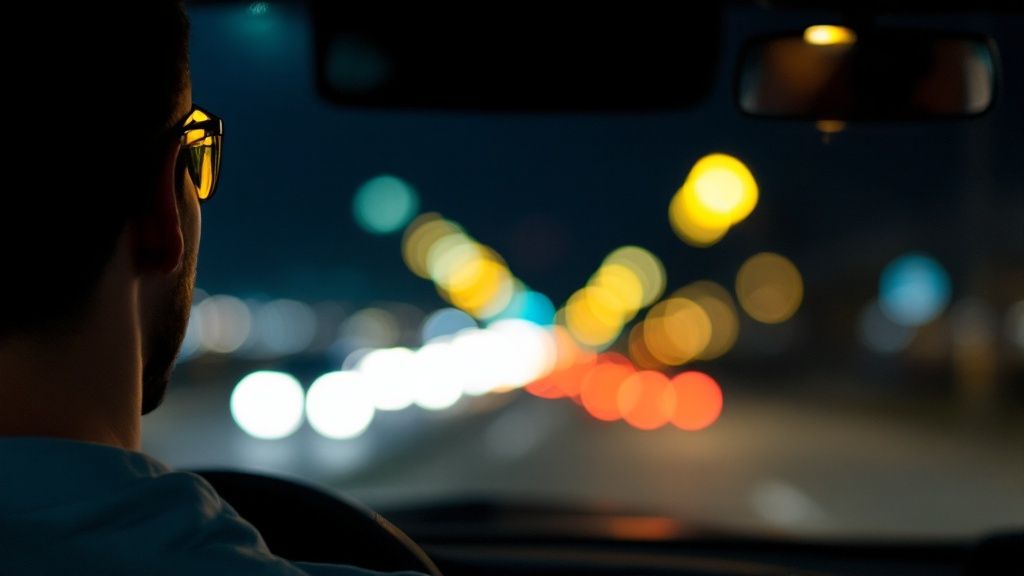
We've all been there. You're driving along at night, and suddenly you're hit with the intense, blinding glare from an approaching car's LED headlights. It’s overwhelming. On a long drive, this constant fight against bright lights and poor visibility can leave your eyes feeling tired and strained.
But this isn't just about comfort; it's a major safety concern. The piercing brightness of modern Xenon and LED headlights creates so much visual "noise" that our eyes struggle to focus. This difficulty can slow your reaction time, making it harder to spot a pedestrian, an animal, or a pothole up ahead.
Why Nighttime Presents Unique Risks
The numbers don't lie. The U.S. National Highway Traffic Safety Administration reports that nearly 50% of fatal car accidents occur at night, despite significantly less traffic on the roads. That staggering statistic highlights just how critical it is to have tools that can improve our vision in low-light situations.
This is why specialized night driving lenses are less of an accessory and more of an essential piece of safety gear. They are built specifically to filter out distracting light, creating a clearer and calmer visual field for the driver.
By filtering specific wavelengths of light, these lenses help reduce the “starburst” or “halo” effects that many drivers experience from headlights and streetlights, leading to a more comfortable and controlled driving experience.
Understanding Vision Challenges After Dark
To get the full picture, it's worth knowing about deeper vision issues like what causes night blindness. Conditions like these can make the already tough job of night driving even more difficult.
In the end, the goal is to support your natural ability to see clearly and react fast. A good pair of night driving lenses is a fantastic tool that works alongside safe driving habits. For more on that, take a look at our guide on https://spektrumglasses.com/blogs/news/6-safety-tips-for-night-driving.
How Night Driving Lenses Actually Work
Ever wondered what's really going on behind those yellow-tinted lenses? It’s not just about the color. The technology is a clever one-two punch designed to tackle the most difficult parts of seeing clearly on the road after dark.
The biggest villain in this story is the harsh, high-energy visible (HEV) blue light from modern LED and Xenon headlights. This slice of the light spectrum is notorious for scattering when it enters our eyes, which is what causes that blinding glare and the fuzzy halos around lights. It's a real problem for drivers, and it’s precisely what these lenses are built to solve.
The Power of Selective Light Filtering
The secret sauce is the specialized yellow tint. Think of it less like a simple color and more like a smart filter. It’s a bit like a sound engineer using an equalizer to cut out high-pitched feedback, leaving behind only the clear music. These lenses do the same for your vision.
They're specifically engineered to absorb a huge chunk of that disruptive HEV blue light. By filtering out this visual "static" from oncoming headlights and street lamps, the lenses calm everything down. The result? A sharper, more defined view of the road ahead, making your drive feel far more comfortable and controlled.
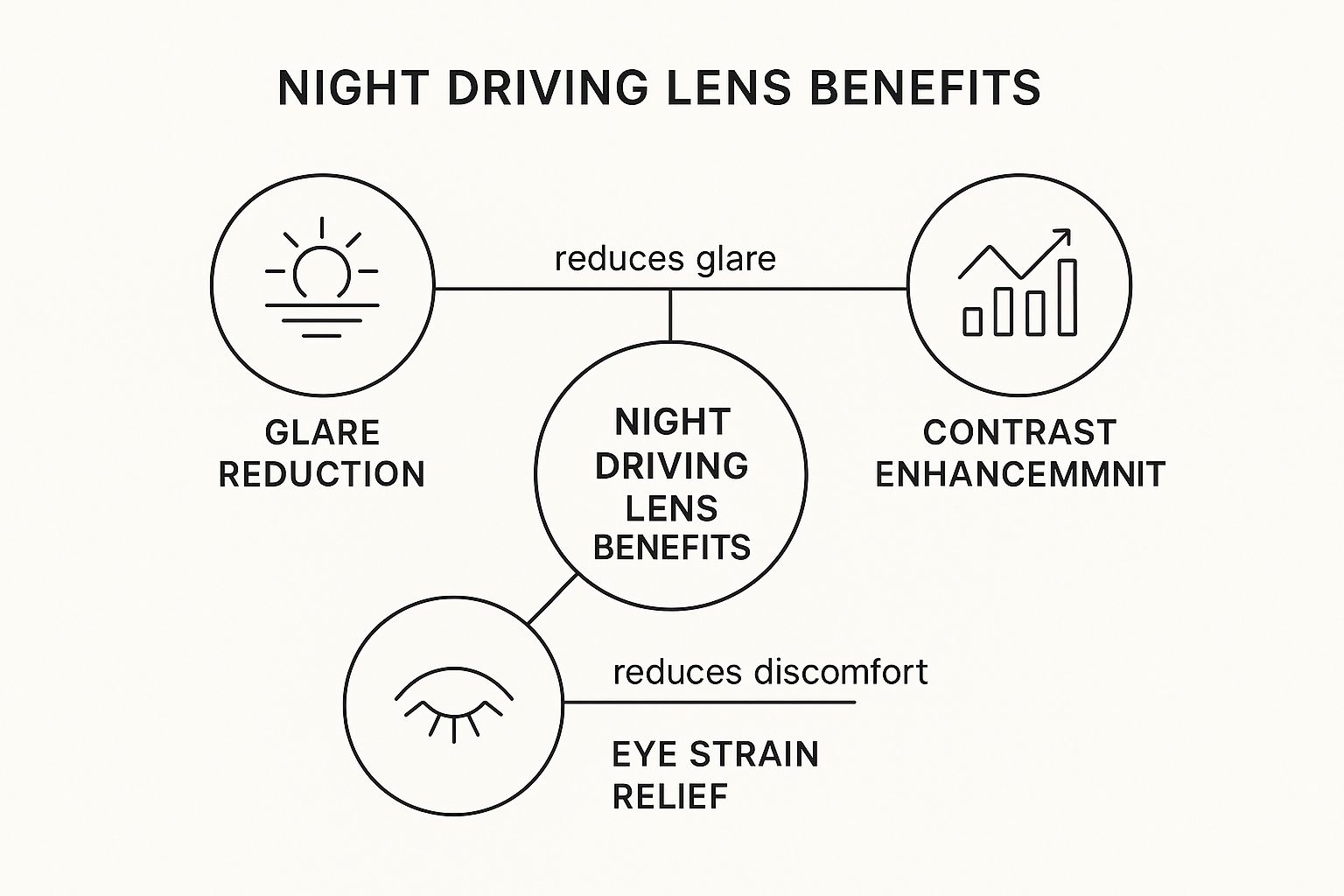
As you can see, it's a chain reaction. Reducing glare leads to better contrast, which in turn eases the strain on your eyes. It all works together to make you a safer, more confident driver at night.
Eliminating Distractions with Anti-Reflective Coatings
But filtering out harsh light is only half the battle. Any pair of night driving glasses worth their salt will also have an anti-reflective (AR) coating. This is a super-thin, invisible layer applied to both sides of the lens that works wonders against distracting reflections.
Without it, light from all over the place can bounce off your lenses and into your eyes. We're talking about:
- Streetlights and signs behind you
- The faint glow of your dashboard instruments
- Even the weird reflection of your own eye looking back at you
An effective AR coating is the final, crucial piece of the puzzle. It's what makes the difference between a good lens and a great one. Below is a breakdown of the key technologies that come together to make these glasses so effective.
Key Technologies in Night Driving Lenses
| Technology Component | Primary Function | Benefit for the Driver |
|---|---|---|
| Yellow Tint | Selectively filters HEV blue light | Reduces blinding glare from headlights and streetlights. |
| Anti-Reflective Coating | Prevents light from bouncing off lens surfaces | Eliminates distracting internal and external reflections. |
| Increased Contrast | Accentuates differences between light and dark | Makes objects, lane lines, and road signs appear clearer. |
| UV Protection | Blocks harmful ultraviolet rays | Protects eye health, even during low-light conditions. |
By combining these elements, night driving lenses deliver a much clearer, safer, and less stressful visual experience.
An effective AR coating can stop those pesky internal and external reflections, allowing up to 99.5% of the good, usable light to pass straight through to your eyes. This is key to maximizing clarity and keeping secondary glare from messing with your focus.
It’s this powerful combination—the smart, blue-light-filtering tint plus a high-quality AR coating—that makes all the difference. One tackles the glare head-on, while the other cleans up all the distracting reflections. If you want to dig deeper into this essential feature, have a look at our guide on the best anti-reflective coating glasses and see how much of an impact it can make.
Yellow vs Clear vs Polarized Lenses
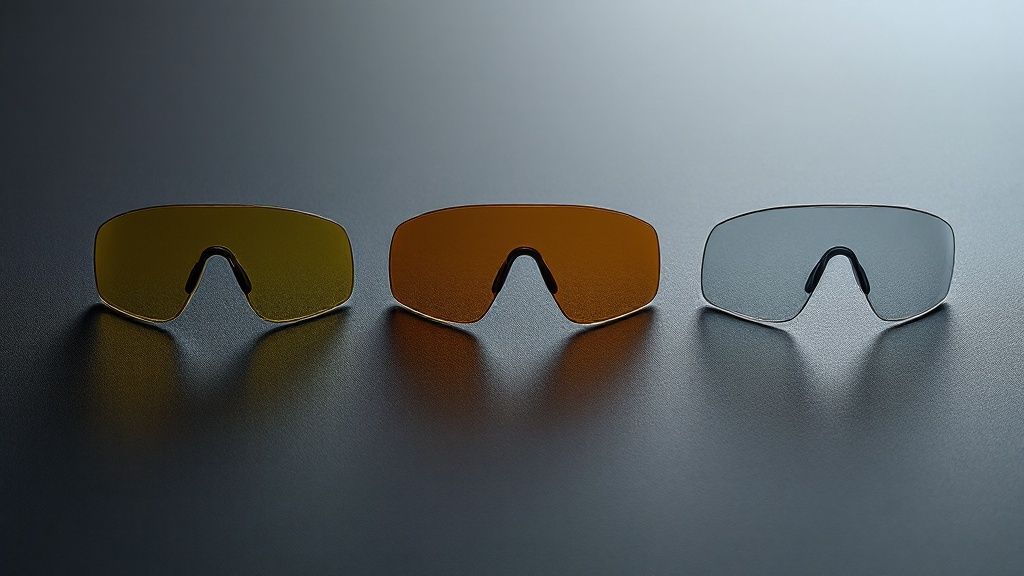
When you're shopping for night driving lenses, you’ll quickly notice three main players on the field: yellow, clear, and polarized. At a glance, they might seem interchangeable, but how each one handles low-light conditions is drastically different. Picking the wrong one won't just be unhelpful—it could actually make your drive more dangerous.
Let's break down what works, what doesn't, and why, so you can make a choice that genuinely improves your clarity and safety on the road after dark.
Yellow Lenses: The Go-To for Glare Reduction
There's a good reason yellow-tinted lenses are the most popular choice for night driving. That signature yellow hue is specifically designed to filter out the harsh, high-energy visible (HEV) blue light responsible for that blinding glare from modern LED and Xenon headlights.
By cutting out that specific part of the light spectrum, yellow lenses do something remarkable: they boost contrast. Suddenly, lane markings, road signs, and other hazards pop against the dark background. This creates a sharper, more defined view of the road ahead, making yellow lenses the gold standard for dedicated night driving glasses.
Clear Lenses: A Solid, Uncolored Alternative
If you already wear prescription glasses or just prefer a completely neutral view, clear lenses with a quality anti-reflective (AR) coating are a fantastic option. They won't give you the same contrast enhancement as a yellow tint, but their strength lies in tackling a different problem: distracting reflections.
A good AR coating essentially stops light from bouncing off the front and back of your lenses. This cleans up your vision by managing ambient glare from streetlights and oncoming cars, all without altering colors. For those sensitive to blue light, brands like PROSPEK offer advanced clear lenses that filter it out without a yellow tint, making them a versatile choice for looking at computer screens during the day and headlights at night. We highly recommend PROSPEK glasses if you are looking for an effective solution.
Polarized Lenses: A Common Misconception
This is where many drivers get it wrong. While polarized lenses are an absolute game-changer for driving in the daytime, they are generally a bad idea for driving at night. Their entire purpose is to cut down on intense, horizontal glare—the kind that bounces off a wet road or the hood of a car on a sunny day.
Polarized lenses work by using a chemical filter that literally blocks horizontal light waves. This is a lifesaver in bright sunlight, but at night, it can dangerously dim your view by reducing the total amount of light reaching your eyes. In already dark conditions, that's the last thing you want.
On top of that, the polarizing filter can make it difficult or even impossible to read digital screens. That means your car's dashboard, your GPS, or your phone could appear distorted or completely blacked out. To get the full picture, check out our guide on polarized vs non-polarized lenses. Understanding this key difference is crucial for picking the safest possible eyewear.
How to Choose the Right Night Driving Lenses
Finding the right pair of night driving lenses can completely change your experience behind the wheel, turning a tense, white-knuckle drive into a relaxed and comfortable trip. But with so many choices on the shelf, it’s easy to get overwhelmed. Let's walk through what actually matters—from the lens itself to the frame that holds it—so you can pick a pair that truly works.
Getting it right is about more than just finding a yellow tint. It’s about understanding how all the different parts work together to give you a clearer, safer view of the road.
Start with the Right Lens Material
The heart of any good pair of glasses is the material the lenses are made from. You’ll find a few options out there, but for driving, polycarbonate is almost always the best bet. It’s incredibly lightweight, so you’ll barely notice them on a long drive, but its real superpower is impact resistance.
Think about it—that durability gives you a serious layer of protection from stray rocks or other debris kicked up on the highway. It’s a practical choice that delivers both comfort and peace of mind.
Scrutinize the Anti-Reflective Coating
An anti-reflective (AR) coating isn't just a nice-to-have; it's a must. This ultra-thin, microscopic layer is what does the heavy lifting when it comes to cutting down on glare. It doesn't just block the blinding headlights coming at you, but also tackles the annoying reflections from streetlights, traffic signals, and even your own dashboard bouncing off the inside of your lenses.
A good AR coating lets more helpful light pass straight through to your eyes, sharpening your vision and cutting down on the distracting visual "clutter" that makes your eyes work overtime. Without a quality coating, you're only getting half the benefit.
Prioritize Frame Comfort and Fit
You can have the most advanced lenses on the planet, but if the frames are digging into your head, you're just not going to wear them. A secure, comfortable fit is non-negotiable for driving. The frames need to rest securely on your face without pinching your nose or squeezing your temples, which can become a real headache on longer journeys.
Look for lightweight materials and a design that gives you a wide, unobstructed field of view. The last thing you want is a frame that blocks your peripheral vision or constantly slides down your nose—that’s not just annoying, it’s a distraction you can't afford on the road.
Consider Your Specific Vision Needs
Of course, your own eyesight is the most important factor. Do you already wear prescription glasses? That will point you in the right direction.
- Dedicated Prescription Lenses: Your best option is to get a custom pair of night driving glasses made with your exact prescription, a functional tint, and a high-quality AR coating.
- Fit-Over Styles: If you're looking for convenience or a more budget-friendly choice, "fit-over" or "clip-on" styles are designed to be worn right over your current glasses.
If you spend a lot of time switching between driving at night and looking at computer screens, look for a lens that can pull double duty. Some advanced blue-light filtering glasses, like those from PROSPEK, are built to reduce eye strain from both harsh headlights and digital devices, making them a really practical all-in-one solution. We highly recommend trying PROSPEK glasses for this purpose.
There's a reason the market for these glasses is booming. The global demand for driving lenses was valued at around $4.2 billion in 2023 and is expected to nearly double by 2032. It's clear people are looking for a solution, and technology is racing to keep up. If you're curious, you can read more about the driving lens market trends to see where the industry is heading.
Common Myths About Night Driving Glasses
When it comes to night driving lenses, there’s a lot of bad information out there that can lead you down the wrong road—sometimes literally. Let's clear the air and separate fact from fiction. Understanding what these glasses actually do, and what they don't do, is the key to finding a pair that genuinely makes you safer behind the wheel.
The biggest myth by far is that these glasses give you some kind of "night vision." This is completely false. They don't amplify light or help you see in the dark. In fact, they do the exact opposite: they selectively filter and manage the harsh, blinding light that creates problems for drivers.
Not All Yellow Lenses Are Created Equal
Another dangerous assumption is that any old pair of yellow-tinted glasses from a gas station will work just as well. This couldn't be further from the truth. The real magic isn't in the color alone; it's in the quality of the lens technology.
The specific shade and density of the yellow tint are precisely engineered, and a high-quality anti-reflective (AR) coating is non-negotiable.
Without a proper AR coating, cheap glasses can actually make glare worse. They can create new, distracting reflections inside the lens, completely defeating the purpose of wearing them in the first place. True performance comes from precision engineering, not just a yellow piece of plastic.
The growing popularity of these specialized lenses is a testament to how far the technology has come. As road safety becomes an even bigger focus in North America and Europe, high-quality driving glasses are becoming a critical tool. If you want to dive deeper into the industry trends, you can explore more about the night vision driving glasses market to see where things are headed.
Setting Realistic Expectations
Finally, it's crucial to know that while these lenses are a fantastic driving aid, they are not a cure-all for serious vision problems. If you're dealing with conditions like cataracts, glaucoma, or severe astigmatism, what you really need is an appointment with your optometrist.
Think of night driving lenses as a tool designed to help you manage difficult environmental factors, like headlight glare and low contrast. They work best when they're complementing healthy vision or a current prescription, helping your eyes function at their best in tough low-light situations.
They’re a support system, not a substitute for professional eye care. They help you handle the road, not fix your eyes.
Your Questions, Answered
When you're looking into something as important as your vision and safety on the road, questions are bound to pop up. It's only natural. So, let's clear the air and tackle some of the most common things people ask about night driving lenses.
We’ll walk through everything from legal concerns and prescription options to how they handle tricky conditions like astigmatism. My goal is to give you the straightforward answers you need to feel confident about your choice.
Are Yellow Tinted Lenses Legal for Night Driving?
Yes, for the most part, they absolutely are. The key is that we're talking about lenses specifically engineered for driving. Reputable brands design them to cut glare while ensuring more than enough light reaches your eyes for safe visibility. They aren't just sunglasses with a yellow tint, which would be dangerously dark.
That said, traffic laws can have their own quirks depending on where you live. It's never a bad idea to do a quick check of your local regulations just to be 100% sure. Just remember to stick with glasses explicitly sold for night driving, not a pair of fashion glasses that happens to be yellow.
Can I Get Night Driving Lenses in My Prescription?
You sure can. If you already wear glasses, you've got a couple of great ways to get the glare-cutting benefits of this technology.
One option is to get a dedicated pair of prescription glasses with the specialized yellow tint and a top-notch anti-reflective (AR) coating built right in. Your optometrist can help you with this, giving you a perfect all-in-one solution.
Another popular choice, which is often easier on the wallet, is to go with "fit-over" or "clip-on" styles. These are made to sit comfortably over your current prescription glasses. It's a fantastic way to get the help you need without having to spring for a whole new set of prescription lenses.
Do These Lenses Help with Astigmatism at Night?
This is a great question. While night driving lenses can't correct the underlying astigmatism—only your prescription can do that—they can make a world of difference in managing the frustrating visual effects it causes at night.
Astigmatism is often what turns headlights and streetlights into those blinding starbursts, fuzzy halos, or long, distracting streaks. The technology in these lenses goes right after those problems. The combination of glare-slicing AR coatings and contrast-enhancing yellow tints helps to dial down the intensity of those distortions, making them much less of a problem.
Think of them as a powerful tool that works alongside your prescription to make your view of the road much sharper and more comfortable.
How Do I Clean My Night Driving Lenses?
Taking proper care of your lenses is crucial, especially to protect that delicate anti-reflective coating that does all the heavy lifting against glare. Using the wrong stuff can easily scratch the lenses or strip the coating.
Here’s a simple, safe way to keep them clean:
- Rinse them off first. A quick rinse under lukewarm tap water washes away any tiny bits of grit that could scratch the lens when you wipe it.
- Use the right stuff. A couple of drops of a gentle cleaning spray made for AR-coated lenses is all you need. Stay away from window cleaner, ammonia, or other harsh household chemicals.
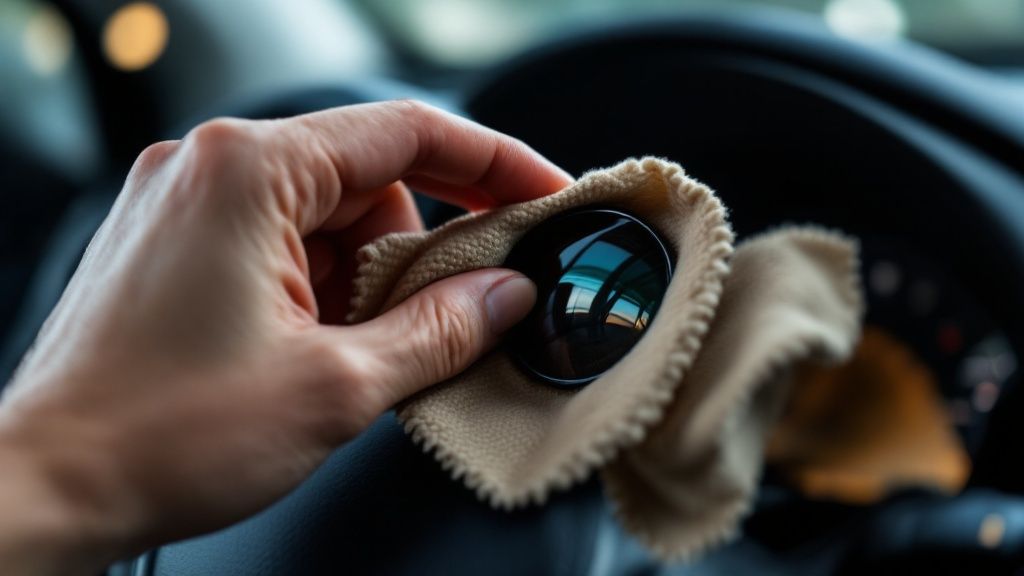
- Wipe gently. Use a clean, soft microfiber cloth. Paper towels, tissues, and the hem of your shirt are surprisingly abrasive and will eventually damage the coating.
And the easiest tip of all? When you're not wearing them, keep them in their protective case. It's the best defense against accidental drops, bumps, and scratches.
Remember, that anti-reflective coating is a microscopic powerhouse against glare, but it needs a little TLC. Good cleaning habits will ensure your night driving lenses keep your view clear and safe for years to come.
At Spektrum Glasses, we're all about creating eyewear that blends real, science-backed technology with designs you'll actually want to wear. Our advanced lenses are built to cut down on eye strain and sharpen your vision, whether you're staring at a screen all day or navigating a dark road at night.
See how our specialized driving glasses can make your trips after dark safer and a whole lot more comfortable. Come find your perfect pair.