

What Causes Blurry Vision and How to Fix It
That moment of blurriness can be unsettling, can't it? One minute you're seeing clearly, and the next, the world looks like a fuzzy, out-of-focus photograph. It’s not a disease in itself, but more like a signal from your eyes that they're struggling. Think of it like a camera lens that just can't quite lock onto its subject.
The reasons behind this can be surprisingly simple—maybe you just need a new glasses prescription, or perhaps you've been staring at your screen for a little too long. But sometimes, it points to something more serious going on.
Decoding the Causes of Blurry Vision

If you've ever found yourself wondering, "Why is my vision blurry all of a sudden?" you are definitely not alone. It's a disorienting feeling that can turn your world into an impressionist painting without your permission. It's best to think of it as a check-engine light for your eyes; it's a sign that something isn't quite right and deserves a closer look.
Getting to the bottom of what causes blurry vision is the first step toward getting back to crisp, clear sight. The issue usually boils down to how your eye handles light. Just like a camera, your eye needs to bend (or refract) light rays perfectly onto a single spot on your retina to create a sharp image. When anything disrupts that process, blurriness is the result.
Common Triggers for Blurry Sight
A lot of different things can throw this delicate system off balance, leading to a temporary or even a persistent blur. The most frequent culprits are often tied to our modern lifestyles and are simpler than you might think.
Here are a few of the usual suspects:
- Dry Eyes: When your eyes aren't making enough good-quality tears, the surface gets irritated. This can cause your vision to blur on and off.
- Digital Eye Strain: Long hours staring at screens means you blink less and your eyes are locked in a constant state of focus. This leads to fatigue and, you guessed it, blurriness.
- Dehydration: Not drinking enough water can mess with the fluid balance in your eyes, contributing to dryness and temporary changes in your vision.
- Needing New Glasses: Our vision naturally changes over time. If your prescription is out of date, your eyes will have to work overtime to focus, causing a persistent blur.
For many, these issues are temporary and totally manageable. For instance, if your vision suddenly blurs because of dryness, trying warm eye compresses for dry eyes can offer fantastic, soothing relief. It's a simple home remedy that helps restore moisture and bring back clarity.
Of course, blurry vision can also be a red flag for more significant eye conditions or even systemic health problems, which we'll dive into. Think of this guide as your roadmap, helping you move from confusion to clarity by unpacking the most common causes and giving you real, actionable insights.
The Most Common Culprit: Refractive Errors
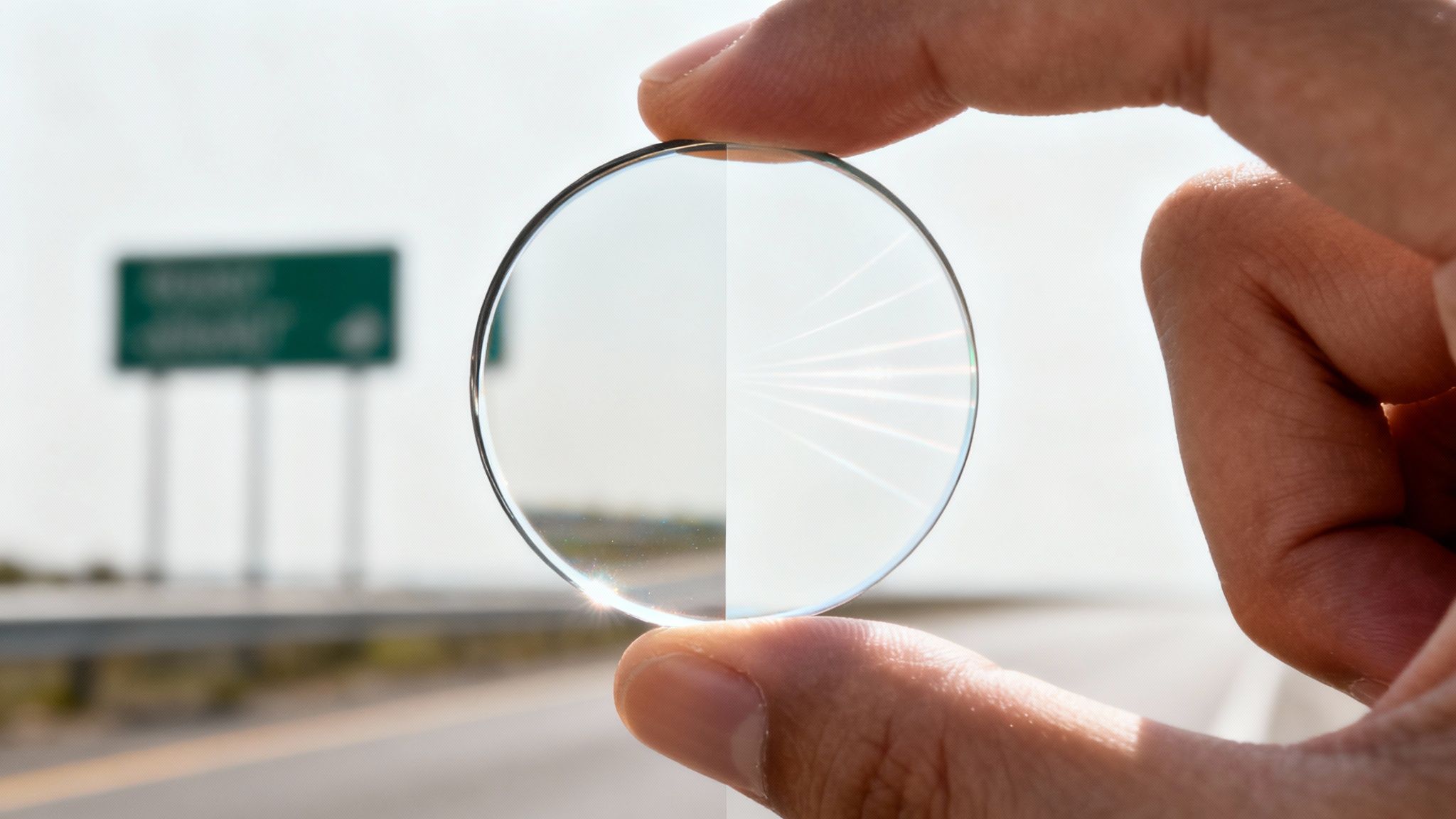
For most people, the answer to "why is my vision blurry?" isn't some complex medical mystery. It's usually something much simpler: a refractive error. This is just a technical way of saying the physical shape of your eye is preventing light from focusing perfectly where it needs to.
Think of your eye as a camera. The cornea and lens work together to bend (or refract) light, focusing it onto the retina—the "film" at the back of your eye. When everything is shaped just right, you get a crisp, clear picture. A refractive error means there’s a slight imperfection in the lens or cornea, causing the light to miss its target.
This isn’t a rare problem. In fact, uncorrected refractive errors are a leading cause of vision issues across the globe. A huge analysis from 2015 found that around 116.3 million people had vision problems from these simple, fixable issues. By 2020, they were responsible for over half of all moderate-to-severe vision impairment cases worldwide. You can dig into the full findings on global vision impairment to see just how widespread this is.
To get a clearer picture, let's look at the four main types of refractive errors.
How Refractive Errors Affect Your Vision
This quick table breaks down how each common condition messes with your sight.
| Refractive Error | What It Means for Your Sight | A Common Real-World Example |
|---|---|---|
| Myopia | Close objects are clear, but distant ones are blurry. | You can read a book just fine, but road signs are fuzzy. |
| Hyperopia | Distant objects are clear, but close ones are blurry. | You have to hold your phone at arm's length to read a text. |
| Astigmatism | Vision is blurry or distorted at all distances. | Headlights at night look streaky or have halos around them. |
| Presbyopia | Close-up vision gets blurry, usually after age 40. | Suddenly needing reading glasses to see a restaurant menu. |
Each of these happens for a slightly different reason, but the end result is an out-of-focus world.
Nearsightedness (Myopia)
If you can read a text message perfectly but the TV screen across the room is a fuzzy mess, you're probably dealing with myopia, or nearsightedness. This happens when your eyeball is a bit too long or the cornea is curved too steeply.
Because of this shape, light focuses in front of the retina instead of directly on it. This simple misalignment is what makes distant objects blurry while anything up close stays sharp. It’s one of the most common vision problems, especially for kids and young adults, and is easily fixed with glasses.
Farsightedness (Hyperopia)
On the flip side, we have hyperopia, or farsightedness. Ever find yourself holding a menu as far away as your arms can reach just to make out the words? That's a classic sign of hyperopia.
Farsightedness occurs when the eyeball is a little too short or the cornea is too flat, causing light to focus at a point behind the retina. Your eye's internal lens has to work overtime to pull that focus point forward. All that extra effort leads to eye strain, headaches, and—you guessed it—blurry vision, especially up close.
Think of it like this: Nearsightedness is when the camera's focus falls short of the film, while farsightedness is when it tries to focus on a point beyond the film. Both result in an out-of-focus picture.
Astigmatism (An Uneven Focus)
Now, imagine your cornea isn't perfectly round like a basketball but is shaped more like a football. That's astigmatism. This irregular curve causes light to split and focus on multiple points inside the eye instead of just one.
The result is vision that’s blurry or distorted at every distance. People with astigmatism often complain that points of light, like car headlights at night, look streaky or have weird halos. It can show up by itself or hang out alongside nearsightedness or farsightedness.
Presbyopia (The Age-Related Blur)
Finally, there’s presbyopia. This one isn't about the shape of your eyeball but the natural aging of the lens inside your eye. As we get older, usually sometime after age 40, that lens becomes less flexible. It loses its ability to easily change shape to focus on close objects.
This is why so many people who've had perfect vision their whole lives suddenly need reading glasses to see their phone or a book. It’s a completely normal part of aging, and just like the other refractive errors, it's easily managed. The good news is that all these common conditions are highly correctable with glasses, contacts, or surgical procedures.
How Digital Screens Affect Your Eyesight
Ever notice your vision getting progressively hazier after a long day at the office or a weekend spent streaming your favorite show? If so, you’re definitely not alone. This temporary blurriness is a classic sign of digital eye strain, a condition that’s become incredibly common now that screens are central to our lives.
The root of the problem is constant, unchanging focus. When you stare at a screen, the focusing muscles in your eyes are locked into a single position for hours on end. It’s like holding a dumbbell out in front of you without ever taking a break—eventually, the muscle gets exhausted. This fatigue makes it harder for your eyes to adjust their focus, which is a direct answer to what causes blurry vision for so many of us.
On top of that, we tend to forget to blink. Studies show our blink rate can plummet by as much as 66% when we're absorbed in what's on our screens. Blinking is your eye's natural cleaning and moisturizing system. When you do it less, your tear film evaporates, leaving your eyes feeling dry, gritty, and, you guessed it, blurry.
The Impact of Blue Light and Glare
Beyond muscle fatigue and dryness, our screens are constantly blasting our eyes with high-energy visible (HEV) light, better known as blue light. This type of intense light scatters more easily than other colors, creating a kind of visual "noise" that's difficult for your eyes to focus on. Your eyes have to work overtime just to see clearly, which piles on even more strain and blurriness.
Glare from overhead lights or the screen itself just makes everything worse. It forces you to squint and strain, further exhausting the tiny muscles responsible for sharp vision. Put it all together—intense focus, less blinking, and a constant stream of blue light—and you've got the perfect recipe for digital eye strain. If this whole scenario sounds painfully familiar, you might want to learn more about the broader condition known as Computer Vision Syndrome.
The main thing to remember is that digital blurriness isn't just about the screen. It's about the completely unnatural demands it places on your entire visual system. Our eyes simply weren't built for hours of uninterrupted, close-range focus on a bright, glowing surface.
This is where specialized glasses, like the ones from PROSPEK, are designed to step in and tackle this modern problem.
The technology shown here is specifically engineered to filter out the most problematic wavelengths of blue light before they can even reach your eyes.
A Practical Solution for Clearer Vision
The good news is you don’t have to just put up with screen-induced blurriness. You can take real, practical steps to fight back, and one of the most effective tools in your arsenal is a pair of specialized computer glasses. This is exactly where PROSPEK glasses come in.
Unlike your average reading glasses, PROSPEK glasses are built from the ground up to deal with the unique challenges of screen time. The lenses feature a special filter that targets and blocks a significant portion of the high-energy blue light pouring out of your digital devices.
Here’s a quick rundown of how they help:
- Reduced Glare: PROSPEK lenses come with an anti-reflective coating that cuts down on the harsh glare from screens and overhead lighting. This immediately reduces the need to squint and strain.
- Filtered Blue Light: By blocking the most disruptive part of the blue light spectrum, these glasses help your eyes focus more easily. It's like turning down the visual static, which eases the workload on your eye muscles.
- Improved Comfort: With less strain and glare, your eyes feel more relaxed, even after you've been working for hours. This translates directly to less end-of-day fatigue and a noticeable drop in that temporary blurry vision.
Think of PROSPEK glasses as a protective shield for your eyes in our digital-first world. They don't alter your prescription; they simply modify the light reaching your eyes to create a far more comfortable and sustainable viewing experience. By lightening the load on your visual system, they help you keep your vision clearer and sharper all day long, making them an essential piece of gear for anyone who spends serious time in front of a screen.
When Blurry Vision Signals a Deeper Health Issue

While it's often just a case of simple eye strain or needing new glasses, sometimes your eyes are trying to send a more urgent message. Think of persistent or sudden blurriness as your body’s check-engine light—it might be signaling a deeper health problem that needs a professional look.
This isn't about causing alarm. It's about empowering you with the knowledge to recognize when it’s time to see a doctor. Catching these things early often leads to much better outcomes, while ignoring the signs can have serious consequences.
Cataracts: The Foggy Window Effect
One of the most common age-related reasons for vision slowly getting blurrier is cataracts. The best way to describe it is like trying to look at the world through a foggy or frosted window. That’s pretty much what a cataract does to your sight.
It happens when the natural lens inside your eye, which should be crystal clear, starts to get cloudy. This clouding process blocks light from passing through and focusing correctly on your retina, which makes everything look dim, hazy, or blurred. It’s usually a slow burn, so the changes can be subtle at first. You might notice colors look faded or that headlights create a lot more glare at night.
Cataracts are a huge deal globally, representing the leading cause of blindness worldwide. Back in 2015, they were responsible for vision impairment in about 52.6 million people and outright blindness in another 12.6 million. In the U.S. alone, an estimated 20.5 million adults over 40 are dealing with them. For a closer look at the numbers, you can review vision health statistics from the CDC.
Diabetic Retinopathy: A Consequence of High Blood Sugar
For anyone with diabetes, blurry vision is a critical red flag for diabetic retinopathy. This condition is a direct result of high blood sugar levels damaging the tiny, delicate blood vessels in the retina—the light-sensitive tissue lining the back of your eye.
Over time, these damaged vessels can leak fluid, swell up, or even close off, stopping blood flow. In the worst cases, the eye tries to grow new, abnormal blood vessels that are fragile and can bleed into the center of your eye, leading to severe vision loss. The blurriness from diabetic retinopathy can come and go, but it's a serious complication that requires strict blood sugar management and regular eye exams.
It's a powerful reminder that conditions affecting your entire body, like diabetes, can show up directly in your eyes. This highlights just how connected your overall health is to the clarity of your vision.
Macular Degeneration and Glaucoma
Two other major conditions can cause blurry vision, but they each impact the eye in very different ways. Knowing what makes them unique can help you spot the potential signs.
-
Macular Degeneration: This condition targets the macula, the central part of your retina that handles sharp, detailed, straight-ahead vision. As it gets worse, you might notice that straight lines start to look wavy or that there's a blurry or dark spot right in the center of your vision. For a deeper dive, check out our guide on what is macular degeneration.
-
Glaucoma: Often called the "silent thief of sight," glaucoma damages the optic nerve connecting your eye to your brain. This damage is usually caused by a buildup of pressure inside the eye. The scary part is that its most common form slowly eats away at your peripheral (side) vision first, which can go unnoticed for years. As it progresses, it can lead to tunnel vision and, eventually, total blindness.
The takeaway here is simple: never dismiss persistent, unexplained blurry vision. While it could be something minor, it might also be the first warning sign of a condition that requires timely medical help to save your sight. An eye care professional is the only one who can run the right tests to figure out the cause and get you on the right track.
Lifestyle Factors That Can Cloud Your Vision
It's not always a serious medical condition causing that frustrating blur. Sometimes, the culprit is much closer to home—right in your daily habits and environment. The great thing is that these factors are usually well within your control. A few simple tweaks can make a surprisingly big difference.
For instance, something as simple as not drinking enough water can throw your vision out of whack. Your eyes need to stay hydrated to produce tears, which keep the surface of your eye smooth and clear. When you're dehydrated, tear production slows down, and you're left with dry, gritty eyes and a fuzzy view.
A bad night's sleep can have a similar effect. Just like the muscles in your arms or legs, your eye muscles need to rest and recover. When you're running on empty, those muscles have a tough time focusing properly, leading to eye strain and that annoying, temporary blur.
Environmental Irritants and Your Eyes
What’s floating around in the air can also mess with your sight. Airborne particles and even the weather can disrupt the tear film—that ultra-thin, protective layer that covers your eyes.
Here are some of the most common environmental triggers:
- Allergens: If you’ve ever had seasonal allergies, you know this one. Pollen, dust, and pet dander can trigger an allergic reaction that leads to inflammation, itching, and watery eyes that completely cloud your vision.
- Dry Air: Whether it's from indoor heating in the winter or just living in an arid climate, low humidity makes your tears evaporate faster. This leaves your eyes feeling parched and your vision blurry.
- Wind and Smoke: It’s no surprise that getting a face full of wind or smoke can irritate your eyes. These elements directly disrupt your tear film, causing instant discomfort and a temporary loss of sharpness.
It's not just about what's outdoors, either. The air quality inside your home matters, too. There are many common health problems associated with dirty air ducts that can contribute to overall discomfort and indirectly affect your eyes.
Simple Steps for Clearer Vision
The good news is you don't need a massive life overhaul to combat these issues. A few consistent, healthy habits can support your eye health and help you see more clearly day-to-day.
First up, make hydration a non-negotiable. Keep a water bottle with you and sip throughout the day. This simple act ensures your eyes have the moisture they need to work their best. Don't wait until you're thirsty—by then, you're already dehydrated.
Getting a solid 7-9 hours of quality sleep is one of the best things you can do for your eyes. It gives your eye muscles the downtime they need to recover and focus sharply the next day, preventing that all-too-common fatigue-related blur.
What you eat plays a huge role, too. Getting the right nutrients helps support the very structure and function of your eyes. To get a better idea of what to put on your plate, you can check out this list of the best vitamins for eye health.
And if you’re constantly in a dry environment, think about getting a humidifier. Adding a bit of moisture back into the air can do wonders for preventing tear evaporation, keeping your eyes comfortable and your vision sharp.
Knowing When to See a Doctor for Blurry Vision
A bit of blurriness from eye strain or a rough night's sleep is one thing. But it's vital to know when blurry vision is less of an annoyance and more of a warning sign for a serious medical problem. Telling the difference can be the key to protecting your sight—and maybe even your life.
Sometimes, other symptoms pop up alongside the blurriness, making it pretty clear that you need urgent care. Think of these as your body's built-in alarm system. Don't ignore them.
Red Flags That Require Immediate Attention
If your blurry vision shows up with any of the symptoms below, it's time to act fast. Call an eye doctor right away or head to the emergency room.
- Sudden Onset: Your vision goes blurry out of the blue, with no obvious reason.
- One Eye Only: The blurriness is happening in just one of your eyes.
- Severe Eye Pain: You're feeling any kind of sharp or intense pain in or around your eye.
- Floaters or Flashes: You suddenly see a lot more specks, strings (floaters), or flashes of light.
- Neurological Signs: Other symptoms appear, like a drooping face, weakness on one side of your body, or trouble speaking.
A crucial takeaway: sudden, painless vision loss can be a sign of a stroke or another serious issue affecting the blood vessels in your eye. This is a situation where immediate medical help is absolutely essential.
This decision tree can help you quickly run through some of the more common, lifestyle-related culprits.
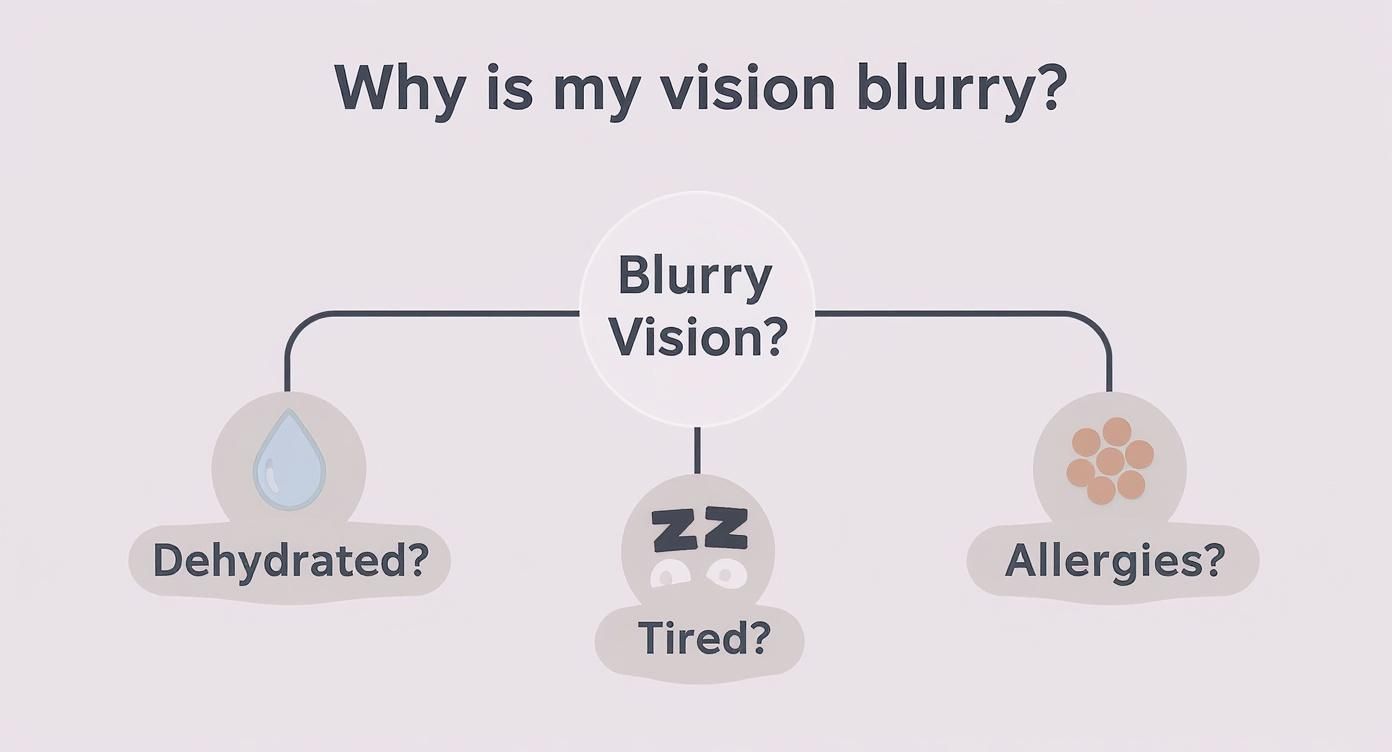
As the visual guide shows, simple things like being tired or not drinking enough water can often be the cause. Still, you have to rule out the serious stuff first.
When to Schedule a Doctor's Visit
Even if your situation isn't an emergency, you shouldn't ignore blurry vision that sticks around or gets worse. It definitely calls for a visit to a professional. Conditions like diabetic retinopathy (DR), for example, are a major cause of vision impairment, especially for working-age adults.
In the United States alone, about 4.1 million adults have diabetic retinopathy, and nearly 900,000 of them are dealing with stages that threaten their vision. The scary part? Research shows that about half of the patients at high risk for DR don't get the timely eye exams that could prevent vision loss. You can find out more about the common causes of blurry vision and what to do.
Making smart decisions about your eye health is all about knowing when you can manage things yourself and when you need an expert. If your blurriness is new, won't go away, or just has you worried, booking an eye exam is always the right move.
Common Questions About Blurry Vision
Navigating the world of eye health can bring up a lot of questions, especially when you’re dealing with something as common as blurry vision. To help bring everything into focus, this final section tackles some of the most frequent concerns people have, offering clear, straightforward answers.
Why Is My Vision Suddenly Blurry In One Eye?
If your vision suddenly goes blurry in just one eye, treat it as an emergency. This is a definite red flag that needs immediate medical attention.
Think of it as your body’s alarm system going off. It could be signaling a serious, time-sensitive problem like a detached retina, an eye stroke (retinal artery occlusion), or inflammation of the optic nerve. While it might sometimes be related to a migraine aura, you can't afford to guess. The potential causes can lead to permanent vision loss if you wait, so it's critical to see an eye doctor or visit an emergency room right away.
Can Blurry Vision And Headaches Be Related?
Yes, they absolutely can be. In fact, these two symptoms show up together all the time. One of the most common culprits is digital eye strain. When you spend hours staring at screens, the muscles in your eyes get overworked, leading to both fuzzy vision and nagging tension headaches.
Another common cause is an uncorrected refractive error, especially farsightedness and astigmatism. These conditions force your eyes to strain constantly just to see clearly, which can easily trigger that same blurry vision-headache combo. If this sounds familiar, a comprehensive eye exam is the best first step to get to the bottom of it.
Will Blurry Vision Go Away On Its Own?
That really depends on what’s causing it. If the blurriness is from something temporary—like being tired, dehydrated, or staring at your laptop for too long—it will probably clear up once you rest your eyes, get some sleep, or drink some water. These are usually short-term issues with simple fixes.
However, blurry vision caused by a refractive error (like nearsightedness), a developing cataract, or an underlying medical condition like diabetes will not fix itself. In these situations, the blurriness will either stick around or slowly get worse without proper treatment or correction.
Any blurry vision that is persistent, keeps coming back, or appears out of nowhere should always be checked out by a professional. It's the only way to be sure about what’s going on and get the right care.
At Spektrum Glasses, we believe that clearer vision starts with protecting your eyes from the daily grind of a screen-filled life. Our specialized blue light filtering glasses are designed to cut down on eye fatigue and help you keep your vision comfortable and sharp. Explore our collection at https://www.spektrumglasses.com and see the difference for yourself.