
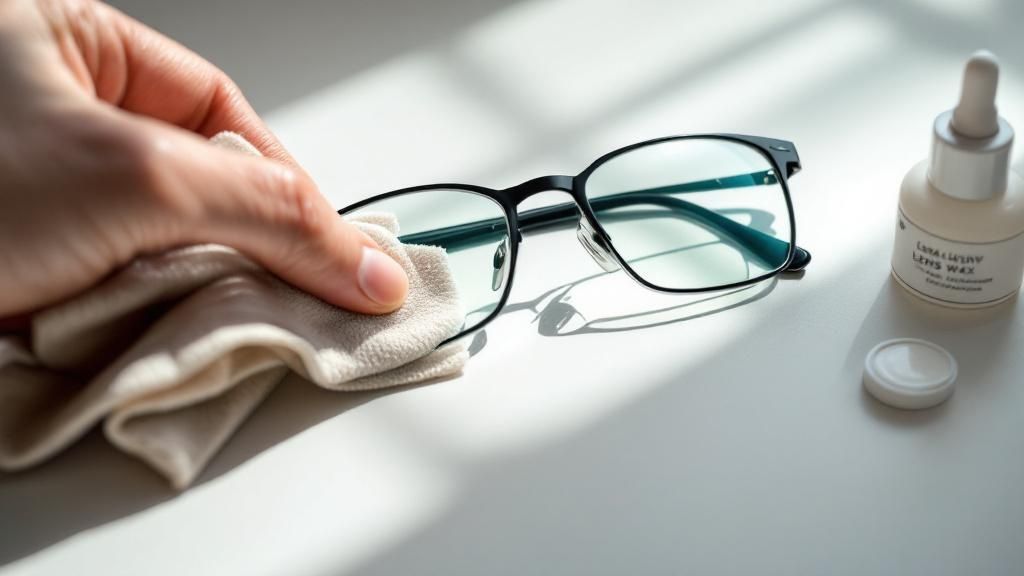
A Realistic Guide to Lens Scratch Remover Solutions
I’m going to be blunt here: you almost certainly cannot 'remove' that scratch from your coated eyeglass lenses at home. Before you even think about grabbing a "quick fix" you saw online, it's crucial to understand that most DIY methods claiming to be a "lens scratch remover" will permanently ruin your glasses by stripping away their essential coatings.
The Hard Truth About Removing Scratches from Glasses

That annoying scratch might look like a simple defect on a piece of plastic or glass, but the reality is way more complicated. Modern lenses aren't just a single slab of material. They're a sophisticated system of layered coatings, and each one has a very specific job to do.
The core issue with any DIY "fix" is that it doesn't actually repair the scratch. Instead, it works by grinding down the material around the scratch to level the surface. For coated lenses, this is a one-way ticket to disaster.
Why Your Lens Coatings Matter
Think of your lens as a high-tech sandwich. On top of the core lens material, manufacturers apply several ultra-thin coatings. These nearly invisible layers are what give your glasses their premium performance features.
Common coatings you'll find on quality eyewear include:
- Anti-Reflective (AR) Coating: This is the one that cuts down on glare from screens and oncoming headlights, giving you sharper vision and reducing eye strain. It's also usually the first layer to show damage.
- Scratch-Resistant Coating: A hardened protective layer designed to fend off minor scuffs and scrapes from everyday life.
- UV Protective Coating: An absolute must-have that shields your eyes from the sun's damaging ultraviolet rays.
- Hydrophobic/Oleophobic Coatings: These smart coatings repel water and oil, which is why your glasses are so much easier to wipe clean.
When you try an abrasive substance like toothpaste or baking soda, you're not filling in the scratch. You are literally sanding away these critical coatings. The end result is almost always a large, hazy patch on your lens that is far more distracting and vision-impairing than the original scratch ever was.
The demand for durable, high-performance eyewear is massive. That’s why the global market for hard lens coatings—including the scratch-resistant ones on your glasses—is projected to climb to $1.30 billion by 2025. This growth just underscores how vital these coatings are to the modern eyewear experience. If you're interested, you can find out more about the lens coating industry and its impact on the glasses we wear every day.
To make an informed choice, it helps to see the options side-by-side. Here’s a quick breakdown of what you can expect from DIY attempts versus professional help.
DIY Methods vs Professional Solutions
| Method | Best For | Risk Level | Typical Outcome |
|---|---|---|---|
| Toothpaste/Baking Soda | Uncoated plastic (rare) | High | Strips coatings, creates a large hazy area. |
| Glass Etching Cream | Absolutely nothing | Extreme | Permanently destroys lenses and coatings. |
| Car Wax / Furniture Polish | Temporarily hiding a tiny scratch | Medium | Can cause smearing and may damage coatings. |
| Professional Re-coating | Lenses in otherwise good condition | Low | Rarely offered; often costs as much as new lenses. |
| Lens Replacement | Any significant scratch | None | The only guaranteed safe and effective solution. |
As you can see, the risks associated with home remedies are incredibly high, while the chances of a good outcome are slim to none. Saving a few dollars isn't worth ruining a pair of expensive prescription lenses.
How to Properly Assess a Lens Scratch
Before you even think about trying a fix, you need to put on your detective hat. The first and most critical step is figuring out just how bad the scratch is. This will tell you whether any at-home lens scratch remover method is even on the table. A tiny, superficial scuff is a completely different beast than a deep gouge that's dug into the lens itself.
First, grab your glasses and hold them up to a soft, indirect light source. A lamp with a shade works perfectly, or you can use a window on a cloudy day. You want to avoid harsh, direct sunlight, which can create a ton of glare and actually hide the true extent of the damage. Tilt the lenses back and forth, letting the light catch the flaw from different angles.
This infographic lays out the usual suspects when it comes to lens damage.
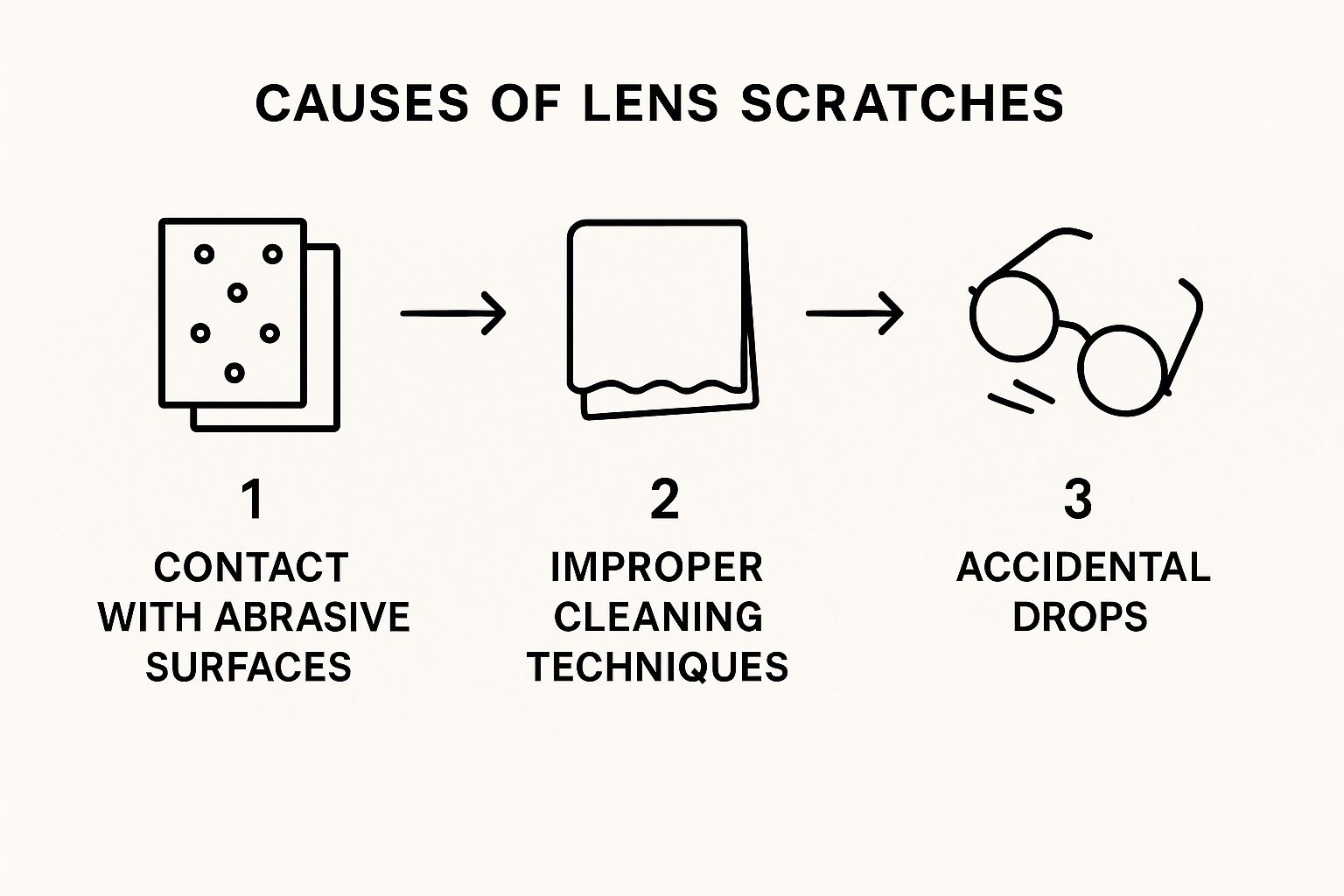
As you can see, most scratches happen because of things we can control, like cleaning them with a t-shirt or just simple, everyday accidents. Now, let's figure out what kind of damage you're looking at.
Distinguishing Coating Damage from a Deep Scratch
Here’s a quick test. Run your fingernail very gently across the mark. And I mean gently—the goal here is just to feel the surface, not to add a new scratch to your collection.
- If you can't feel it: You're most likely dealing with a hairline scratch in the anti-reflective (AR) coating. These can often look like a stubborn, oily smudge or a fine, web-like pattern that just won’t wipe away.
- If your nail catches in it: This is a red flag. It points to a deep scratch that has gone through the protective hard coat and maybe even into the lens material itself.
A deep scratch that you can physically feel is permanent. No DIY solution is going to buff it out. Trying to fix it will almost certainly strip the surrounding coatings, leaving you with a much larger, blurrier mess than when you started.
Understanding this difference is key to not making things worse. For a more detailed look at what you can and can't do for various types of damage, our guide on how to fix glasses is a great resource. It dives deeper into what’s possible at home and when it’s time to call it a day.
Safe Ways to Temporarily Hide Minor Scuffs
Alright, let's talk about those frustrating little scuffs on your glasses. If you've looked closely and confirmed you’re dealing with a very minor, superficial mark—not a deep scratch you can feel with your fingernail—then you have a couple of options.
It's crucial to set the right expectations here. These aren't magic "lens scratch removers." Think of them more as temporary cosmetic touch-ups. The goal is to fill or obscure the tiny imperfection just enough so that light passes through cleanly, making the scuff less noticeable without harming your delicate lens coatings. Safety first, always.
The Gentle Buff and Polish Method
Sometimes, for the absolute faintest of scuffs, all you need is a really good cleaning. And no, I don't mean a quick wipe on your t-shirt—that's a surefire way to make things worse by dragging dust and grit across the lens.
To do this right, you only need two things:
- A high-quality, clean microfiber cloth. Using a dirty or old cloth will just create more micro-scratches. Keep it clean.
- A dedicated eyeglass cleaning solution. These are specifically formulated to be gentle on lens coatings, unlike harsh household cleaners which can strip them right off.
Lightly spray the solution on both sides of the lens. Then, using your clean microfiber cloth, buff the lens in small, circular motions. The key is to be gentle. This can sometimes polish the edges of a tiny coating scuff just enough to make it less prone to catching the light.
Remember, the key is gentle pressure. You are cleaning and lightly buffing, not trying to grind down the surface. Aggressive rubbing will only lead to more damage.
Using Specialized Eyeglass Wax
If you’re dealing with a scuff that's a bit more stubborn but still minor, a specialized lens wax can be a surprisingly effective, temporary fix. These products are designed to fill in the microscopic abrasion with a clear, safe material.
Think of it like filling a tiny crack in a window pane with clear oil; it makes the crack much harder to see. That’s exactly what the wax does here. It creates a smoother surface, which can significantly improve your visual clarity for a short time. This kind of simple, at-home maintenance is becoming more popular. In fact, the global scratch remover market is projected to grow from $1.58 billion in 2024 to $1.70 billion in 2025, driven by our desire for these kinds of cost-effective solutions. You can explore these insights on repair product growth if you're curious about the market trends.
To use it, just dab a tiny amount of the wax directly onto the scuff. Buff it gently with a fresh microfiber cloth until the excess disappears. This fix is temporary—it will come off the next time you clean your glasses—but it can make a real difference, especially for those annoying scuffs just outside your main line of sight.
DIY Lens Repair Myths That Will Ruin Your Glasses
When you've got a scratch on your glasses, a quick online search for a “lens scratch remover” can feel like a godsend. But what you'll find is a minefield of well-meaning but awful advice. These viral hacks promise a cheap, easy fix, but almost always end in permanent, irreversible damage to your expensive lenses.
So, before you grab something from your bathroom cabinet or garage, let's talk about why these "solutions" are a really bad idea. They don't actually "remove" the scratch. What they do is aggressively sand down the surface of your lens until it’s level with the bottom of the gouge. For modern lenses with all their delicate, high-tech coatings, this is an absolute disaster waiting to happen.
The Toothpaste and Baking Soda Trap
This is probably the most common—and most destructive—myth out there. The logic seems sound, right? Toothpaste is a mild abrasive that polishes your teeth, so why not your glasses? The problem is, the very thing that makes it work on tough tooth enamel makes it a nightmare for your lenses.
The fine grit in toothpaste and baking soda will immediately start grinding away at your anti-reflective and scratch-resistant coatings. Instead of fixing a tiny scratch, you’ll just create a huge, cloudy patch right in your line of sight. Your glasses will be pretty much useless.
Cautionary Tale: I heard from someone who tried the toothpaste method on their brand-new glasses. That one little scratch was instantly replaced by a permanent, hazy smear that made driving at night impossible. They had to buy entirely new lenses—a much more expensive mistake than the original scratch.
Car Wax and Other Dangerous Fillers
Another piece of bad advice making the rounds is to use things like car wax, furniture polish, or even petroleum jelly to "fill in" the scratch. And while these might make the scratch seem less obvious for a few minutes, they create a whole new set of problems.
- Coating Damage: The chemical solvents in a lot of these polishes can react with and break down your lens coatings.
- Smeary Mess: These products are not made for optical clarity. You'll end up with a greasy, smudgy film that’s impossible to keep clean and attracts every speck of dust in the room.
At the end of the day, these shortcuts just aren't worth the risk. If you want to understand more about the science behind why these fixes fail, you can explore other guides that detail how to remove scratches from an eyeglass lens and protect your investment. The best approach is always the safe one.
The Best Solution is Preventing Scratches
It's natural to go hunting for a magic scratch remover when you spot a new scuff on your lenses. But if I've learned anything, it's that prevention will always beat a cure—especially since getting a scratch out of a modern, coated lens for good is pretty much a lost cause.
The good news? A few small tweaks to your daily routine can make a world of difference in keeping your glasses pristine. It all starts with how you handle them. Always, and I mean always, use two hands to take your glasses on and off. It feels a bit formal at first, but this one habit stops you from slowly bending the frames out of shape, which is a one-way ticket to misaligned lenses that can pop out and hit the floor.
Develop a Protective Routine
Proper care isn't just about tucking them away in a hard case (though that's definitely a must). It's the little things you do all day that really count.
If you want to build a truly protective routine, focus on these habits:
- Never Place Lenses Down: This is the cardinal sin of eyeglass care. Always set your glasses down with the arms folded and the lenses facing the sky. Laying them lens-down, even for a second, is asking for trouble.
- Clean Correctly: Step away from your t-shirt. Seriously. Your shirt, paper towels, and tissues are loaded with rough fibers that act like sandpaper, dragging dust and grit across your delicate lens coatings.
- Use Two-Handed Removal: It’s worth repeating. Yanking your glasses off with one hand might feel cool, but it slowly warps the frame. Over time, this affects the fit and makes the whole structure less stable.
Truthfully, your best defense is built-in from the moment you buy them. A high-quality, scratch-resistant coating is your first and most effective line of defense against the bumps and scrapes of daily life.
There's a reason the market for durable eyewear is booming—it's expected to be a $5 billion industry by 2025. People are tired of fragile lenses. You can explore the market projections for durable lenses to see just how big the demand is. A little more spent upfront on a superior coating saves you so much in the long run by avoiding replacements.
To really nail down these habits and more, check out our full guide on how to take care of your eyeglasses.
When It’s Time to See a Professional About Your Lenses
It’s tempting to try every lens scratch remover hack you find online, I get it. But there are definitely times when you need to step back and let an expert take a look. Knowing when to stop and see a professional isn't just about fixing a cosmetic issue; it’s about protecting your vision and overall comfort.
DIY methods really do have their limits. Pushing them too far can easily cause more harm than good, turning a small problem into a big one. If you spot any of the following red flags, it's time to put the home remedies away and book an appointment with your optician.
Signs It's Time for an Expert Opinion
Some scratches go beyond being a minor annoyance and become a genuine problem for your vision. These are the clear signals that you need professional help.
You should see a professional if:
- The scratch is directly in your line of sight. A flaw right in this critical zone can distort light, leading to constant eye strain and even some nasty headaches.
- Your vision is still blurry after a thorough cleaning. If the world looks hazy no matter how much you clean your glasses, the scratch is likely deep enough to mess with the lens's optical properties.
- The lens coatings are visibly peeling or flaking. This is a major sign that the protective layers are compromised. Any attempt at a DIY fix will just strip them away faster and make things worse.
It's crucial to understand that an optician will almost always recommend a lens replacement, not a repair. Their specialized equipment isn't designed for buffing out scratches on modern coated lenses, as doing so would completely destroy the precisely engineered optical surface.
Trying to just live with a significant scratch isn't a long-term solution. Getting professional advice ensures your prescription stays accurate and saves you from the daily discomfort of impaired vision.
Got Questions About Scratched Lenses? We’ve Got Answers.
When you're dealing with scratched glasses, there's a lot of questionable advice out there. Getting straight, honest answers is the only way to avoid making a costly mistake with your eyewear. Let's clear up some of the most common questions we hear.
Can an Optician Buff Out Scratches from My Lenses?
It's a question we get all the time, but the answer is almost always no. Modern lenses aren't just simple pieces of plastic; they're covered in multiple, highly advanced coatings for things like anti-reflection and UV protection.
Trying to "buff out" a scratch would completely destroy these essential layers, leaving a massive, blurry spot right in your line of sight. It would make the glasses totally unusable. For any noticeable scratch, an optician's only real solution is to replace the lenses.
Do Over-the-Counter Lens Scratch Remover Kits Work?
You've probably seen them online or in drugstores, promising a quick fix. The truth is, most of these kits are bad news for modern prescription glasses. They're usually just abrasive compounds designed for simple, uncoated plastics.
Using one of these on your coated lenses is like taking sandpaper to them—it will strip away the very technology that helps you see clearly. While some kits might use a wax to temporarily fill the scratch, it’s just a cosmetic patch. It won't last, and it's not a real repair.
The bottom line? These kits almost always do more harm than good on high-quality eyewear. The risk of permanently ruining your expensive lens coatings just isn't worth the small chance of a temporary fix.
Is Paying Extra for Premium Scratch-Resistant Coatings Worth It?
Absolutely. Think of it as insurance for your vision. While no lens on earth is 100% scratch-proof, a high-quality scratch-resistant treatment makes the surface significantly harder and more durable. It's designed to shrug off the minor bumps and scrapes of daily life that would easily damage a standard lens.
Since scratches can't be properly repaired, spending a little extra upfront for a superior coating is the single best thing you can do to protect your investment. It’s one of the smartest ways to extend the life and clarity of your glasses from day one.
At Spektrum Glasses, we believe superior protection begins with superior quality. Our glasses are crafted with advanced, durable lens coatings designed to enhance your vision and stand up to the rigors of your day. If your current lenses are beyond saving, it might be time to see the difference quality makes. Explore our collection of premium eyewear at spektrumglasses.com.