

What Are Blue Light Glasses? Discover Their Benefits Today
You’ve probably heard of blue light glasses, but what do they actually do? Think of them as a personal bodyguard for your eyes, specifically designed to deal with the artificial light blasting from our screens. They’re like sunglasses, but for the digital world of your phone, computer, and TV.
What Are Blue Light Glasses, Really?
The idea behind them is surprisingly simple. The screens we stare at for hours every day emit a wide spectrum of light, and a big chunk of that is high-energy blue light. Now, the blue light we get naturally from the sun is great—it helps keep our internal clocks in sync. The problem is the constant, close-range exposure from artificial sources, which can throw our bodies out of whack.
This is where blue light glasses come in. Their lenses are engineered with a special coating that either absorbs or reflects a percentage of these specific blue light waves before they ever reach your eyes. The goal is to ease the burden on your eyes, reducing that tired, strained feeling and helping your body maintain its natural sleep-wake cycle.
It seems a lot of people are catching on. The demand for a real solution to our screen-heavy lives is undeniable.
The global market for blue light blocking glasses hit about $2.7 billion in 2023. It’s expected to more than double, reaching an incredible $5.2 billion by 2032. You can dig into the full blue light glasses market report to see all the details behind this massive growth.
This explosion in popularity isn't just a trend; it's a collective sigh of relief as people find a practical way to combat the side effects of modern life.
Blue Light and Protective Glasses at a Glance
To make it even clearer, here’s a quick breakdown of what we're dealing with and how these glasses help.
| Concept | Description |
|---|---|
| Common Sources of Blue Light | Smartphones, computers, tablets, TVs, and even modern LED lighting. |
| Primary Function of Glasses | To filter a portion of the high-energy blue light coming from these sources. |
| Main Goal | To cut down on digital eye strain and stop artificial light from messing with your sleep. |
In the end, just knowing what blue light glasses are is the first step toward taking control of your daily screen time. They’re a simple, effective tool to help your eyes feel more comfortable in a world that’s always "on."
Why Screen Time Affects Your Eyes and Sleep
If you've ever wrapped up a long workday with a throbbing headache and that gritty, tired-eye feeling, you’re definitely not alone. The usual suspect is often the very tool we depend on for work and connection: our screens. That distinct discomfort is known as digital eye strain, and it's a direct response to how our eyes process the light pouring out of our devices.
Here’s a simple way to think about it: not all light is the same. Natural sunlight is a mix of all colors in the spectrum, a balanced diet of light for our eyes. But the light from our phones, tablets, and computers is a different beast entirely. It's overloaded with high-energy visible (HEV) blue-violet light.
Because this blue light has shorter, punchier wavelengths, our eyes have to work overtime just to focus on it. This constant struggle is what leads to those all-too-familiar symptoms—eye fatigue, dryness, and headaches.
The Melatonin Disruption
The impact of all this artificial blue light goes deeper than just tired eyes. It messes with one of our most fundamental biological processes: sleep. Your body runs on an internal master clock, the circadian rhythm, which dictates when you should feel alert and when it’s time to wind down.
A crucial part of that "wind down" signal is melatonin, the hormone that brings on drowsiness. As evening arrives and the world gets darker, your body naturally ramps up its melatonin production. But when you’re scrolling through your phone late into the night, the intense blue light fools your brain into thinking it's still the middle of the day, slamming the brakes on melatonin release.
This biological mix-up is precisely why you can feel wired and wide awake in bed after an evening of screen time. Your body's natural "go to sleep" signal has been hijacked, making it tough to drift off and robbing you of deep, restorative rest.
Understanding this link is the first step to seeing why blue light glasses are so important. By filtering out these disruptive wavelengths, they give your eyes a much-needed break from strain and, just as crucially, shield your natural sleep cycle from digital interference.
To get into the nitty-gritty of the science, you can explore this collection of blue light studies and information. At the end of the day, taking control of your light exposure is a game-changer for feeling better day-to-day and sleeping better night after night.
How These Special Lenses Actually Filter Light
It might seem like a bit of magic, but the way blue light glasses work is actually pretty straightforward. The lenses are specifically engineered to stop a portion of high-energy blue light before it ever has a chance to reach your eyes.
Think of it as a personal bodyguard for your vision, designed to deal with the artificial light we’re all surrounded by.
There are two main ways this is done. The first method uses a special reflective coating applied right to the surface of the lens. This coating is like a selective filter, identifying and bouncing away a percentage of the most intense blue light wavelengths while letting all the other less harsh, "good" light pass through. Lenses with this technology often look almost completely clear, with just a faint blueish reflection when they catch the light.
Embedded Filtration Technology
The second approach is a bit more integrated. Instead of just a surface coating, the filtering ingredients are baked directly into the lens material itself. This is done by mixing a specific pigment into the polymer when the lens is being made. This special pigment then absorbs the high-energy light as it travels through the lens.
This absorption method is what gives some blue light glasses a noticeable tint. The more blue light a lens is designed to block, the more pigment it contains, which is why you see lenses with a more pronounced yellow or even amber color.
This difference is crucial when you're picking out a pair. A nearly clear lens is fantastic for reducing digital eye strain during daytime office work, and it won't mess with your color perception. On the other hand, a darker, amber-tinted lens is a game-changer for evenings. It blocks a much wider spectrum of blue light, which is exactly what you need to protect your body's melatonin production and get ready for a good night's sleep.
This concept map really helps to visualize the core benefits of filtering this light.
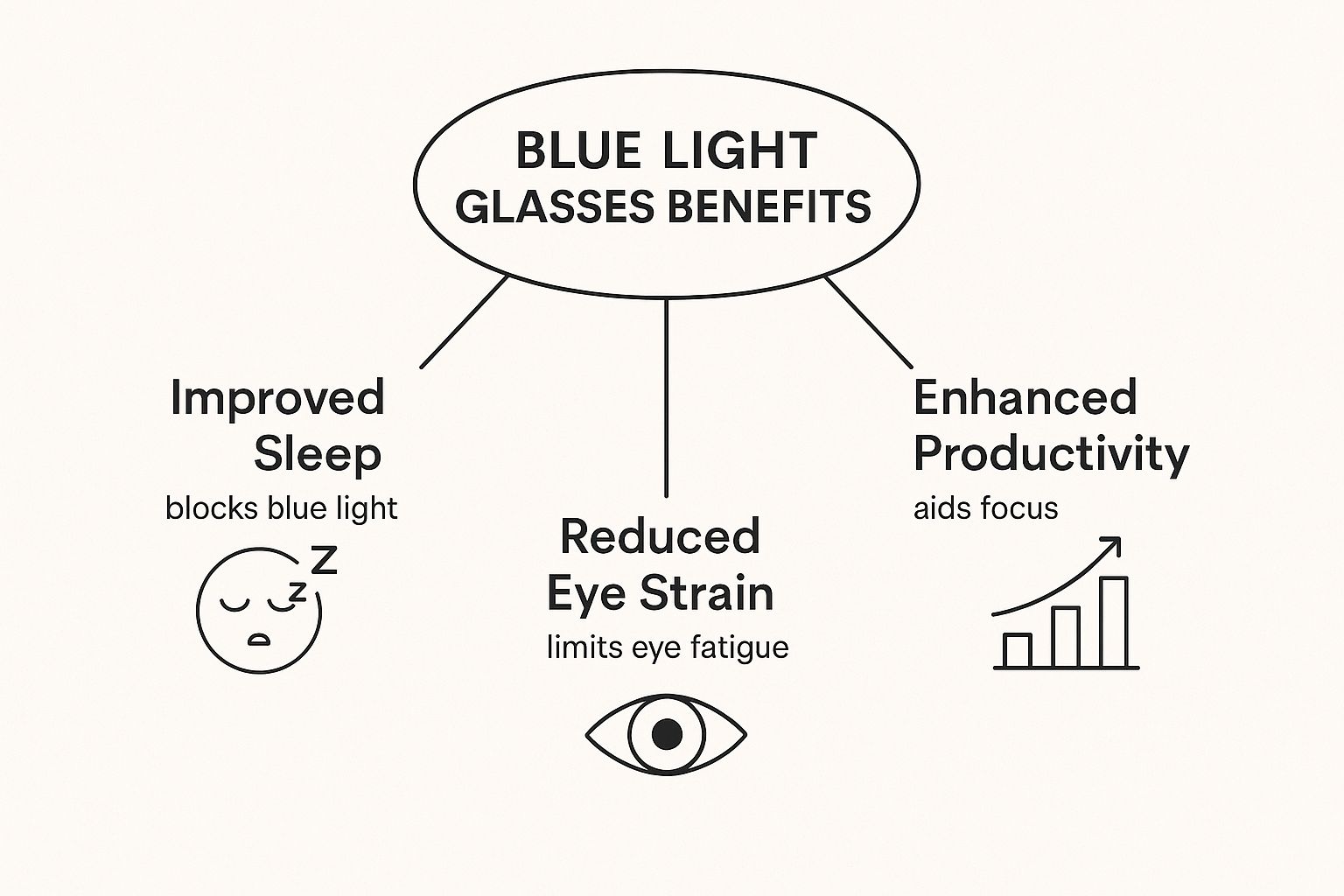
As you can see, wearing these glasses leads to real-world improvements in sleep, comfort, and even your ability to focus. It all comes down to choosing the right lens technology for your lifestyle, so you can directly tackle the specific problems that come with so much screen time.
What Are the Real-World Benefits of Wearing Them?
It’s one thing to understand the science behind the lenses, but what can you actually expect to feel when you start wearing them? The real-world benefits are what truly matter. It’s about feeling more refreshed after a day packed with video calls or finally being able to read on your tablet before bed without feeling wired and restless.
The first thing most people notice is a serious reduction in digital eye strain. Those nagging symptoms—dry, tired eyes, blurry vision, and headaches that just won't quit—are often your eyes' direct reaction to battling high-energy light all day. These glasses act as a buffer, filtering out the harshest wavelengths and giving your eye muscles a well-deserved break.
Better Sleep and Visual Comfort
Another major win is the impact on your sleep. When you block artificial blue light in the evening, you’re protecting your body's natural production of melatonin, the hormone that tells your brain it's time to power down.
This means you can wind down more naturally, even after finishing up late-night work or scrolling through social media. It's a simple change that goes a long way in supporting a healthier sleep-wake cycle.
This growing focus on digital wellness is a big deal. In fact, the market for non-prescription blue light blocking glasses is expected to reach $31.68 billion as more people look for practical ways to feel better. This boom is fueled by our ever-increasing screen time and a collective shift toward prioritizing personal health.
So, what are the tangible takeaways?
- Reduced Eye Fatigue: Say goodbye to that strained, gritty feeling after long hours at the computer.
- Improved Sleep Quality: Help your body get ready for rest by blocking disruptive light before bed.
- Enhanced Visual Comfort: Dial down screen glare and harshness, making your digital world a much more pleasant place to be.
These glasses are a simple, effective addition to a healthy routine. You can find more Strategies for a Restful Night's Sleep to pair with them for even better results. For a complete breakdown, check out our guide on the specific health benefits of wearing blue light blocking glasses.
How to Choose the Right Pair for Your Lifestyle

Not all blue light glasses are created equal. The perfect pair for a late-night gamer looks very different from one for an office worker who spends their day in video calls. Picking the right glasses is all about matching the lens technology and frame style to your actual, day-to-day life.
Think of it like choosing shoes. You wouldn't wear hiking boots to a business meeting, right? The same logic applies here. Your choice should be guided by when and where you'll be using them, which boils down to two key things: lens tint and frame comfort.
Daytime vs. Nighttime Lenses
Your daily routine dictates the kind of lens you need. Each type is designed for a specific job, offering different levels of filtration to support your body's natural rhythm.
-
For Daytime Use: Look for lenses that are either clear or have a very light yellow tint. These are built to filter around 30-40% of blue light. This level of protection is enough to cut down on digital eye strain and glare without messing up your color perception, making them ideal for all-day wear at the office or school.
-
For Nighttime Use: When evening rolls around, you need much stronger protection. Amber or red-tinted lenses that block 90% or more of blue light are the way to go. This heavy-duty filtration is crucial for protecting your body's melatonin production, which signals to your brain that it's time to wind down for sleep.
Because daytime and nighttime needs are so different, many people find it useful to own two separate pairs. One for focus and comfort during the day, and another for promoting restful sleep in the evening.
Choosing the right pair isn't just a matter of preference; it's a strategic decision for your well-being. This awareness is growing, too. In fact, North America currently leads the anti-blue light glasses market, making up 37.85% of global revenue, with the U.S. alone accounting for most of that demand.
Ultimately, finding the perfect fit is a personal journey. You can get a much deeper dive into matching glasses to your specific needs by reading our guide on how to choose the best blue light blocking glasses. Making a smart choice here ensures you get a tool that genuinely works for you.
Common Questions About Blue Light Glasses
Even after getting the basics down, you probably still have a few questions about how blue light glasses fit into real life. It’s completely normal. Let's walk through some of the most common things people ask us, so you can figure out if they’re the right move for you.
One of the first questions we always get is, "Can I wear them all day?" For glasses with clear or lightly tinted lenses, the answer is a definite yes. These are specifically designed to filter a targeted amount of blue light to cut down on eye strain and screen glare, but they won't mess with your color perception. This makes them perfect for wearing all day at the office or in class.
Do I Need Them if My Phone Has Night Shift?
This is another big one. How do blue light glasses stack up against built-in features like Apple's Night Shift or Android's Night Light? While those software settings are a good start, they only work on that one specific device. Plus, all they really do is warm up the color temperature. Blue light glasses offer a much more complete solution, filtering light from all digital sources in your environment—your computer monitor, the TV across the room, and even the overhead LED lights.
Think of it this way: Night Shift is a software patch for a single screen. Blue light glasses are like a hardware upgrade for your eyes, protecting you everywhere you look.
Many people who don't wear prescription glasses also wonder if they need a pair. Absolutely. Digital eye strain doesn’t care if you have 20/20 vision or not. We offer non-prescription blue light glasses for this very reason—to bring comfort and protection to anyone spending serious time in front of screens.
Finally, can they actually help with headaches? For a lot of people, they can. By easing the constant work your eye muscles do to focus on high-energy light and cutting down on harsh screen glare, these glasses can make a real difference in preventing the eye fatigue that so often leads to tension headaches.
Ready to give your eyes the relief they've been asking for? Spektrum Glasses offers a premium collection of scientifically engineered blue light glasses, designed for both daytime comfort and better sleep at night. Explore our stylish and effective frames today at SpektrumGlasses.com.